The meaning of flower colours: how to choose without rigid rules
Red, white, pink, or yellow? Use colours as a starting point and tailor your choice of flowers to the recipient, the context, and the message.
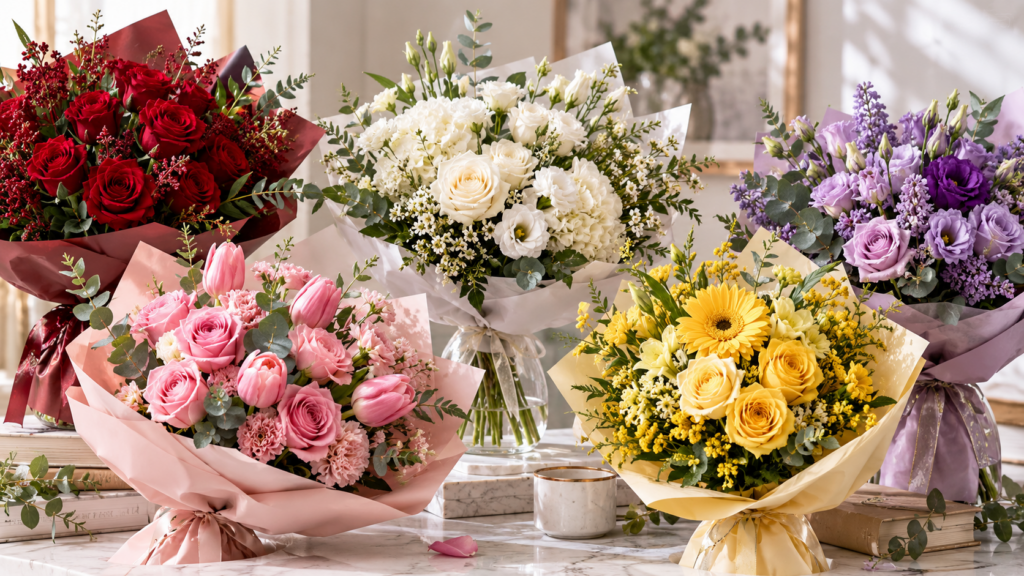
A bouquet’s colour can suggest a certain atmosphere, but it does not function as a universal code. Interpretation depends on the individual, culture, occasion, and the message accompanying the gift.
Start with the visual impact
A monochromatic arrangement emphasizes shape and texture. A contrast of two or more colours can highlight the focal flower. Consider the packaging, too: it can alter the perception of the entire arrangement without changing the flower species themselves.
Red roses are often associated with romantic gestures, but they are not a requirement for expressing affection. Pink can be chosen based on the recipient’s colour preference, without necessarily implying a specific type of relationship or occasion.
White and yellow: context matters
Don’t automatically reserve white flowers for ceremonies. A white arrangement can be a gift chosen to suit the recipient’s style. Nor should yellow be interpreted as having only one meaning.
If you want to convey gratitude, congratulations, or affection, state this in your message. This way, the colour complements your intent rather than having to explain it on its own.
Colour doesn’t define the flower
A blue bouquet doesn’t automatically contain blue roses; the colour might come from other flowers or the packaging. “Lilac” might describe the shade, not the presence of actual lilac flowers. Check the composition list and any information regarding treatments declared for the product.
The photograph is a reference, not a colour standard.
Lighting and screen settings influence colour perception. Showing a photograph is not enough for precise requirements; the specific conditions must be clarified. Do not assume colour customization is available unless explicitly stated.
Continue with mixed bouquets for palette comparisons, or with examples of messages suitable for the occasion.
Order availability is shown on the relevant product page. Orders are possible only where an active offer is displayed. No general launch date is promised. ProFlorist provides the technological infrastructure; in the direct transaction flow, the identified florist is the seller. Consult the published roles and conditions.
Related articles
More ideas from the same area
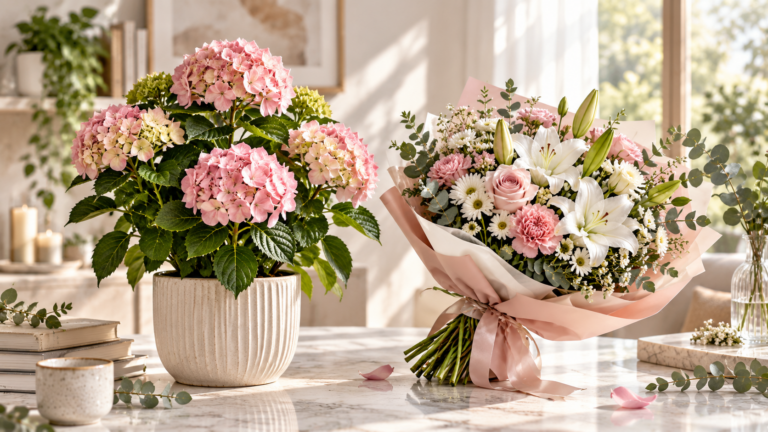
Potted plant or cut flowers? What do you check before choosing
Two types of gifts, different requirements. How to compare potted plants, bouquets, and preserved…
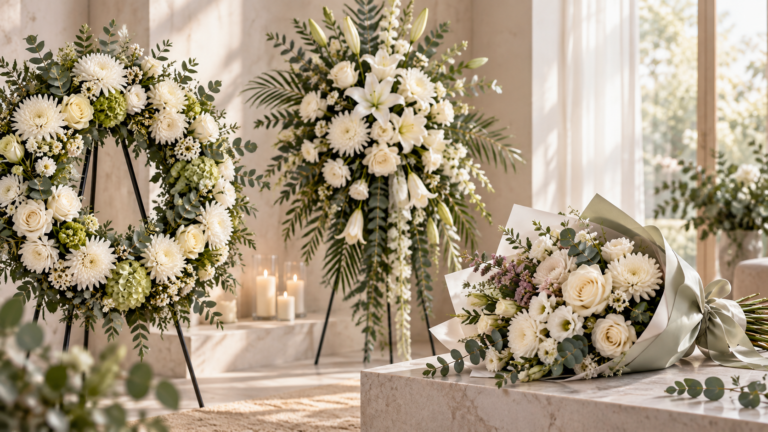
Funeral wreath, spray or bouquet: choosing a condolence gesture
A practical comparison of common funeral-flower formats and the details to confirm before ordering.…
Seasonal flowers: what to check before choosing a catalogue design
A seasonal photograph does not guarantee availability. Before ordering, check the actual composition, colours…