Business & Management / Florists & Stories
The most important criteria when choosing a local florist
Recent reviews, authentic photographs, clear communication, freshness practices and confirmed delivery are stronger selection criteria than advertising alone.
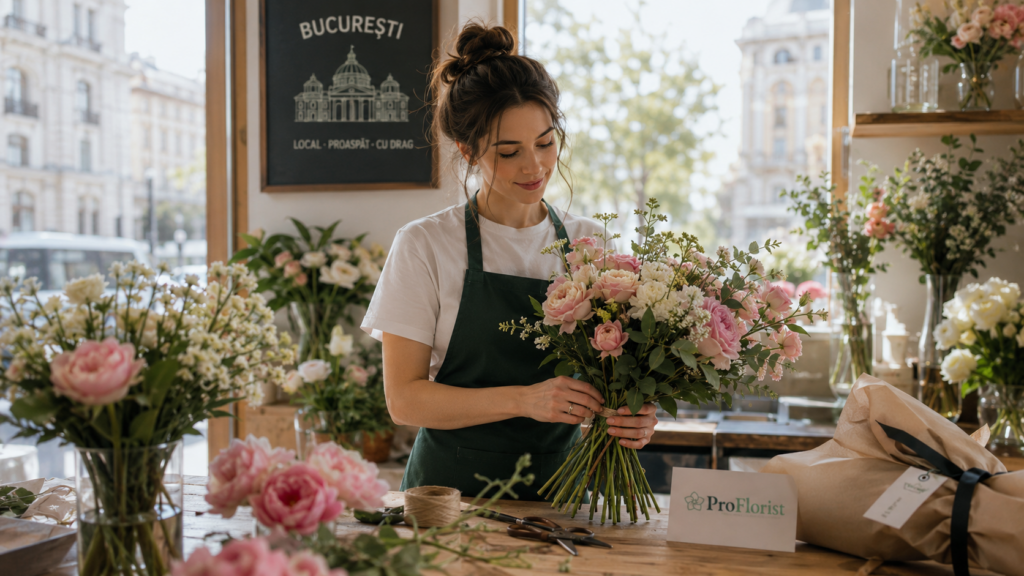
When you look for a local florist, you are not looking only for a beautiful bouquet. The service often needs to work quickly, accurately and with sensitivity: perhaps for a forgotten anniversary, birthday wishes, a thank-you or a conciliatory gesture. Do not choose from the first attractive search image alone; check recent reviews, authentic photographs, response time, clear communication and delivery promises the business can actually confirm.
Why the choice of florist matters
Flowers are among the most emotional products people buy online. They are chosen not only because they are beautiful, but because they need to convey affection, gratitude, respect, regret, celebration or encouragement. When the message is so personal, the ordering experience needs to be clear, safe and dependable.
Customers may choose among neighbourhood shops, online florists, marketplaces, premium studios, family businesses and platforms promising rapid delivery across a city. Their offers can look similar, yet fulfilment may differ: do the flowers arrive fresh, does the bouquet resemble the chosen photograph, does the florist answer questions promptly and does the recipient receive it on time?
The Romanian source draws on the author’s former FlorideLux.ro experience. Customers checked reviews, recent photographs, WhatsApp replies and delivery details, and many telephoned or wrote even when the product was already on the website. They asked whether flowers were available, whether delivery was possible by a particular time, whether a card could be added and whether the bouquet would look like the photograph. This is operational context, not proof of behaviour in every market.
It illustrates a broader point about the flower market: customers often seek trust and personal reassurance before buying a perishable, handmade and emotionally significant product.
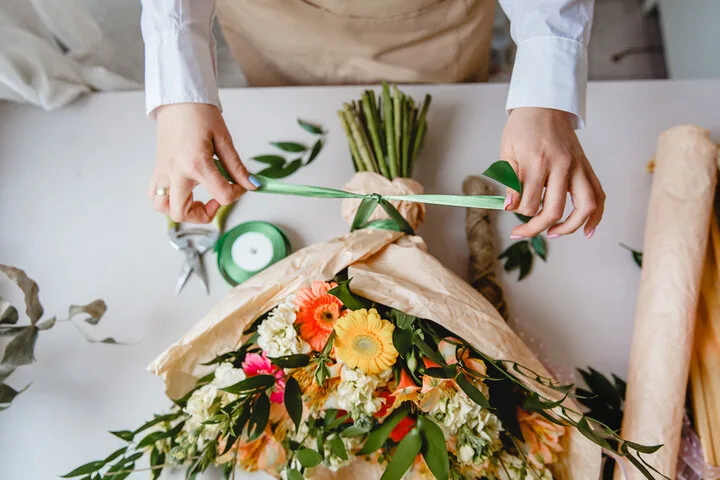
Recent reviews can be more useful than polished advertising
Review count and star rating are not enough. Look for reviews that are recent, specific and sound as though they describe a real order. Useful details include freshness, punctuality, communication, how the delivered bouquet looked, the recipient’s reaction and how any problem was handled.
A florist may have an elegant website, a polished campaign and excellent photography, but reviews show whether the promise survives contact with a real order. Flowers are not standard items taken from a box: they are handmade from variable living material, and current availability can change from one day to the next.
Read recent delivery feedback and compare recurring themes. Reports of fresh flowers, prompt replies, punctual delivery and careful work are useful positive signals. Repeated complaints about delay, poor communication or products that differ materially from their photographs deserve further checking before you order.
Reviews do not need to be perfect; any genuine business can encounter a difficult situation. The response matters: a serious florist explains, corrects and communicates constructively, while ignored feedback or a purely defensive answer may suggest that the customer relationship is not the priority.
Recent photographs help establish current activity
Images matter enormously in floristry, but they need to be read carefully. A beautiful photograph may be old, heavily edited, supplied by a wholesaler or presented only as inspiration rather than as work actually produced in the studio.
A trustworthy current portfolio regularly shows real bouquets, delivered arrangements, recent event work or studio process, with permission and honest labelling. This indicates that the florist is active, working with flowers that are currently available and prepared to stand behind a distinctive style. For customers, it offers a form of visual reassurance.
Seasonal bouquets, products prepared for delivery and arrangements for birthdays, anniversaries or events can indicate current activity. That matters particularly for spontaneous orders, when a customer wants to know that the florist is responsive and handling fresh flowers that day. Such posts still do not confirm stock or delivery capacity for a particular order.
An inactive social account does not prove poor quality, but it may justify an extra check. Telephone, send a WhatsApp message, ask about current availability or, where appropriate, request a representative photograph of the work presently available.
Floristry is a visual craft. A business that works carefully should be able to show its work transparently, and real examples are valuable evidence even though they are not a guarantee by themselves.
Response time can influence a time-sensitive order
Many flower purchases are decided within minutes: a customer sees a bouquet, asks whether it can be delivered today, waits for an answer and makes a decision. If the florist replies three hours later, the impulse may have passed or another option may already have been chosen. A prompt, accurate answer about stock and timing is more useful than an immediate but unreliable promise.
In a busy city, customers need immediate clarity. Ask whether delivery is available today, which time window is realistic, which flowers can be used, whether a card can be added, how payment works and when the order is considered confirmed.
The source article recalls many telephone and WhatsApp enquiries during FlorideLux.ro operations. A working website was not always enough: those customers wanted human confirmation that someone had seen the order and could intervene if a problem arose. That history explains the value of direct reassurance but does not establish a universal customer preference.
A good florist needs communication, attention and order discipline as well as design skill. In a market where purchases can be quick and emotional, a prompt reply may distinguish an order won from one lost, although response targets must remain realistic for the business’s size, staffing and opening hours.
Freshness is a central product requirement
However attractive the website, the customer ultimately remembers how the flowers arrived. A fresh, well-hydrated, clean and carefully wrapped bouquet builds trust; tired flowers, marked petals or over-mature material can destroy it quickly. Conditioning, packaging and handling all affect the quality that is experienced.
A good florist knows how to select, store, hydrate and prepare flowers for delivery. Some stems travel better than others; some need extra protection, white blooms show damage readily, peonies require planning and roses should be checked stem by stem. Seasonal flowers may require an agreed alternative or advance planning.
For a customer, freshness appears in firm stems, clean leaves, unmarked petals, natural scent and flowers that remain attractive for a reasonable time. For the recipient, the bouquet is an experience: opening the door, seeing the flowers, reading the card and feeling the gesture. Freshness still cannot be reduced to a guaranteed number of days, because variety, initial condition, environment and aftercare all matter.
Do not therefore judge by low price alone; poor-quality flowers can turn a kind gesture into a disappointment. A responsible florist may say that a requested variety is not available in suitable condition and recommend an alternative rather than supply inferior material simply to complete the sale.
Local florists may benefit from proximity
Location is another useful criterion. Flowers are not ordinary parcels: they are sensitive to time, temperature and handling. A shorter, well-managed route may reduce exposure and improve the chance of an immaculate arrival, although proximity by itself does not guarantee quality.
A local florist may understand neighbourhoods, traffic patterns, difficult parking or access points and realistic delivery windows. That practical knowledge can be especially valuable for urgent orders or surprises that need to arrive at a particular moment.
ProFlorist’s model starts from the idea that flowers should be prepared as close as practical to the recipient by suitable local florists who can confirm the order realistically. Rapid delivery should not be promised in an area without an available florist. Coverage, product availability and timing should therefore be confirmed for the exact destination rather than assumed.
For customers, confirmed local fulfilment can improve transparency; for florists, it can make enquiries more relevant to an area they actually serve. For the recipient, a shorter journey may support fresher flowers and a better experience. None of these outcomes is automatic, which is why confirmation for the specific order remains essential.

Communication turns an order into trust
Communication matters as much as the product in floristry. Customers need to know what they are buying, what can be delivered or changed and what happens if a requested flower cannot be sourced. A responsible florist does not promise everything, everywhere and at any time; the florist confirms, explains and proposes alternatives.
Flowers are seasonal and sensitive. Sometimes a bouquet can be reproduced closely from a photograph; at other times particular flowers need to be replaced. Substitutions should preserve the agreed style, colour direction and value where possible, and should follow the stated terms and customer consent.
A change is easier to accept when it is communicated before fulfilment and respects the purpose of the order. Someone who selected a delicate pastel bouquet does not expect a vivid composition merely because some flowers were unavailable. The florist needs to preserve the emotional intention, not only the numerical value.
Assess how the florist communicates: are answers clear, are useful questions asked, are details confirmed and are options explained? Those signals suggest a more dependable partner for the order.
Why responsive operations matter in floristry
In many sectors, customers can compare, reflect and return several days later. Floristry often offers less time: the purchase may be spontaneous and the flowers may be needed today for a person who must be surprised within a particular window. Not every order is urgent, and florists should match every response and delivery commitment to their actual capacity.
Florists benefit from current portfolios, clear opening hours, frequent visibility and prompt communication. Beautiful flowers in a refrigerator are not enough if customers do not know the business exists or cannot obtain an answer in time. The source article’s claim that florists must be “a hundred times” more attentive and energetic is rhetorical, not a measurable standard.
A local flower business is a living operation: flowers arrive in the morning, are cleaned and hydrated, orders are made, messages answered, stock checked, posts prepared and deliveries organised. Every bouquet depends on labour, pace, responsibility and orderly processes.
Customers may not see all that work, but they feel it through a quick reply, delivery within the confirmed window, a genuine photograph before dispatch, a correctly written card and the reaction of the person receiving the flowers.
Choose local florists using verified information
When choosing a florist, the main criteria are straightforward: recent reviews, current photographs of real work, prompt and clear communication, sound freshness practices, transparent prices and delivery capacity that has actually been confirmed. Flowers are an emotional choice, and customers need confidence that their gesture will reach the recipient properly.
ProFlorist is designed to support local florists that work carefully, communicate in a human way and supply fresh flowers within their communities. A florist-centred model can encourage more considered ordering and help local businesses remain visible in a market with high promotional costs, but participation does not itself guarantee quality, freshness or delivery. Check the current listing, terms and confirmation for the specific order. Visit www.proflorist.uk to review current market information and available listings, then make the final choice using verifiable evidence.
Related articles
More ideas from the same area

Business & Management / Florists & Stories
How to calculate the real margin on a flower bouquet
A practical method for calculating contribution margin from net revenue and the variable costs…
Business & Management / Florists & Stories
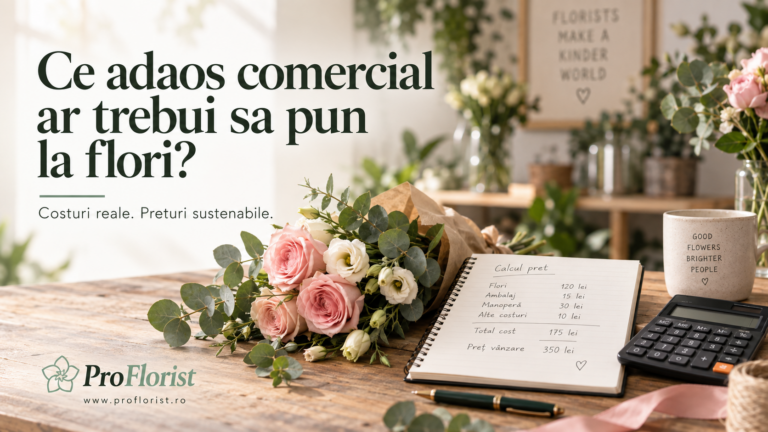
What commercial markup should I apply to flowers?
There is no universal commercial markup that is "correct" for all florists. A multiplier…

Ordering flowers in Bucharest without the hassle: how ProFlorist works
Ordering flowers for delivery in Bucharest may look straightforward, but availability, delivery areas, traffic…