Business & Management / Florists & Stories / Supply & Flower Industry
Beyond floral beauty: standards, identity and the future of Romania’s floristry industry
A Romania-focused discussion with the Association of Romanian Florist Entrepreneurs about professional standards, market structure and industry identity. Views and proposals are attributed to the interview participants rather than presented as settled facts.
In the first material of this series dedicated to the Romanian florist industry, the dialogue with Association of Romanian Florist Entrepreneurs opened up some key themes for the present of a market that is still growing: the transformation of the last decade, the relationship between passion and profitability, structural vulnerabilities in the field, lack of staff, unfair competition and the need for vocational education.
The continuation of the conversation goes on, towards areas that may be less visible to the general public, but essential for those who build daily florist businesses: operational organisation, professional standards, the role of every actor in the commercial chain, the identity of Romanian florist, the impact of competitions and professional communities, but also the long-term solutions for a healthier market.
If the first article talked about the basic tensions and realities of the industry, this second part looks more closely at its internal architecture. Because florics don’t just mean aesthetic, talent or emotion. It also means processes, responsibility, trade delimitation, training, collaboration and the capacity of an entire professional community to build their own maturity indicators over time.
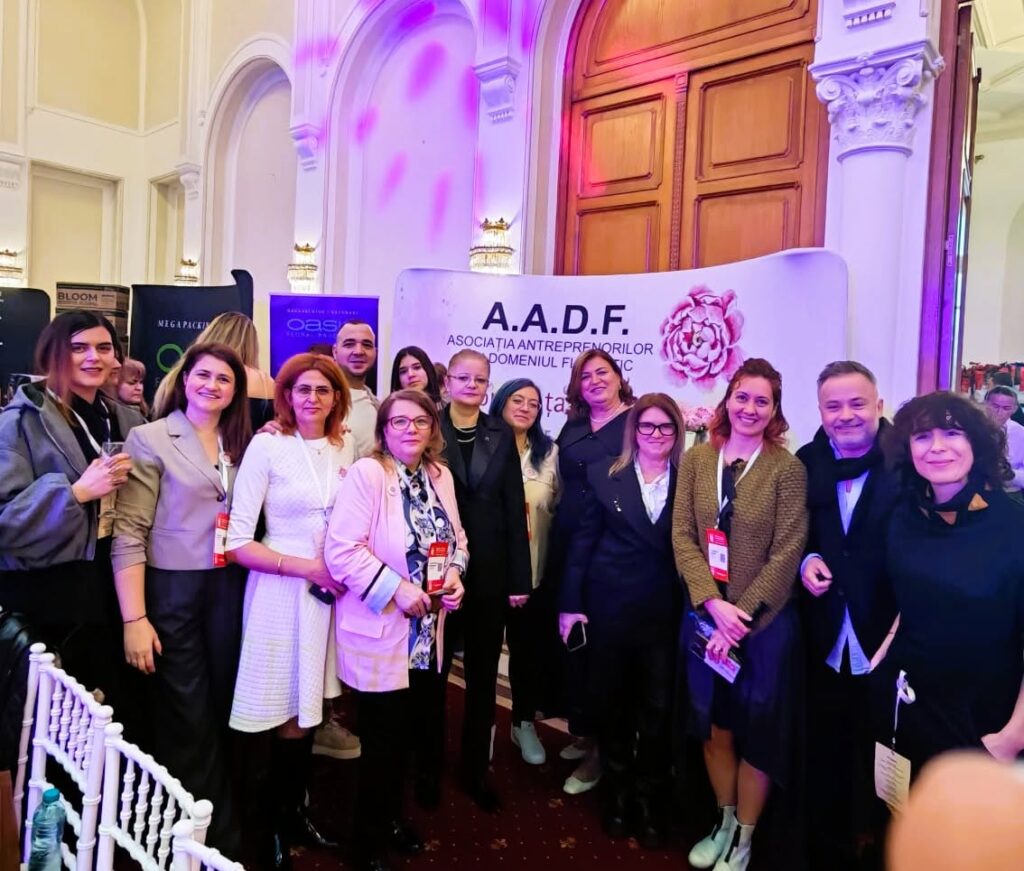
Recurring operational problems in flower shops
Question: What are the recurrent operational problems you see in florists: loss of cargo, lack of traceability, hard-to-control stocks, poor team communication, intuitive calculated prices?
AADF: “All of these structural fragilities, trade imbalances and systemic failures could be considerably reduced, and some even deeply corrected, in so far as Romania’s flowering area would benefit from genuine and consistent standards of professionalism.
In the absence of such a framework, industry often operates through fragmented mechanisms, individual interpretations and disparate forms of reporting on the profession, ethics and entrepreneurial responsibility. Each business inevitably comes to create its own operating rules, its own limits and validation systems, and this lack of structural coherence produces, over time, collective vulnerability and consolidation difficulties across the entire floristic-entrepreneurial ecosystem.
Professional standards should be perceived as essential elements for the stability and maturation of an area.
Defining standards essentially means building clear benchmarks on professional skills, training, ethical conduct, trade delimitation and responsibility for the profession, industry and consumer. It means creating a common language of professionalism, capable of reducing imbalances and providing consistency to a market still in an identical and institutional sedimentation process.
And just because all these components are deeply interconnected, none can be considered secondary. Lack of staff, unfair competition, team instability, fragility of the relationship with the client, difficulty building sustainable businesses or lack of healthy trade delimitation are not issues independent of each other.
Inevitably, all these vulnerabilities directly achieve the profitability of the florist businesses. Because genuine profitability is not the sole result of creativity or immediate commercial performance, but the consequence of a coherent, mature and functional professional ecosystem capable of generating long-term stability and confidence. “
Structural change required in the florist industry
Question: If you could change one structural thing in the Romanian flower industry, what would that be?
AADF: “Professionalisation and maintenance of a functional, coherent and balanced chain within the florist industry are some of the fundamental directions that the Romanian Association of Florist Entrepreneurs supports and constantly promotes as an essential part of the process of maturing and consolidating the domain at national level.
In the vision of the AADF, the evolution of the flowering domain in Romania can be achieved through the existence of a professional ecosystem articulated to competence, responsibility and respect for the balance between all the links that make up this domain.
Equally, maintaining a fair and healthy chain within industry becomes an essential condition for the stability and economic sustainability of the field. A mature market works by respecting the role of each actor involved, from the producer and importer, to the distributor, florist, floral workshop or company specialised in organising events.
When these professional and commercial delimitation become fragile, imbalances inevitably arise that affect the entire ecosystem: dysfunctional competition, unsustainable economic pressure, depreciation of service value and vulnerability of the relationship between profession and consumer.
This is why the professionalism and maintenance of a properly functioning chain are strategic components of a broader process of professional legitimacy and maturity. Because only an area which clearly defines its standards, responsibilities and operating mechanisms can build economic stability, professional authority and real continuity over time in a constantly changing economic and social context. “
The relationship between traditional florists, boutique studios, online platforms and marketplaces
Question: How do you see the ratio of traditional florists, boutique workshops, online platforms and markets places? Will they coexist, specialize, or will some models disappear?
AADF: “Each of these structures responds to distinct consumption mechanisms, different emotional needs and contemporary rhythms of relationships with the floral product. That is why the prospect of long-term coexistence is possible and almost inevitable.
Traditional florists will most likely continue to preserve the relational and human dimension that historically defined the flower domain. They remain spaces of proximity, of confidence built over time and of direct interaction between the florist and the client, a dimension which, in an increasingly digitised and accelerated society, may become even more valuable than in the past.
Boutique workshops will probably strengthen their role as creative identity spaces and distinct aesthetic expression.
Online platforms represent the natural expression of the transformation of contemporary consumer behaviour. They respond to the need for accessibility, speed, immediate availability and logistics efficiency.
Marketplaces are commercial spaces that sell a wide variety of consumer products, including flower products. These are just “hooks,” during the peak periods of the field, but their quality does not constitute competition for specialized, professional places where flowers and plants can be purchased.
The real stake lies in everyone’s ability to understand and assume their own functional identity inside the ecosystem.
Of course, certain florist business models will be obliged to transform, redefine their relevance or rethink their reporting to the contemporary consumer. But the idea of absolute domination of a single commercial model seems a little bit compatible with the deeply complex and emotional nature of the flower domain.
After all, all these structures, traditional florists, boutique workshop, online platform or marketplace – will most likely continue to co-exist “forever” in a permanent negotiation with time, technology and change of human behaviour. “
The identity of Romanian florists
Question: Does Romanian florist have an identity or still import too much visual, commercial and educational models from outside?
AADF: “The Romanian florist is still at a stage of identity construction, at the confluence between the import of external models and attempts to crystallize a professional language of its own. In the absence of a historically consolidated, intergenerational and culturally sedimented tradition, we cannot yet talk about an autonomous, fully articulated and recognizable identity.
In many European spaces, floristics has developed organically, over decades or even centuries, integrating into educational, cultural and social structures that have enabled schools of thought, regional aesthetics and consistent professional standards. In this type of slow and cumulative evolution identity is born: from continuity, tradition and successive refining of practice.
For Romania, however, the development of the field was rather accelerated, fragmented and strongly influenced by external models, both visual and commercial and educational. Naturally, in the absence of their own historical basis, these influences operated as main training benchmarks, generating a hybrid professional ecosystem, where multiple aesthetics, schools and stylistic directions coexist, without fully sedimented identity coherence. This situation is appropriate to be interpreted as a transition structural phase, professional identity is a slow construction.
Some early forms of local differentiation are already being developed, in a working way, in relation to material, in the structure of workshops or in the aesthetics of certain market segments, but they have not yet reached the critical density necessary to transform into unitary and recognizable professional language at national or international level.
In this context, external influences remain inevitable and to some extent necessary. They were a catalyst for evolution, providing landmarks, technical vocabulary and aesthetic openness.
Identity is built through the ability to integrate diverse influences into a coherent system of professional, aesthetic and ethical values. “
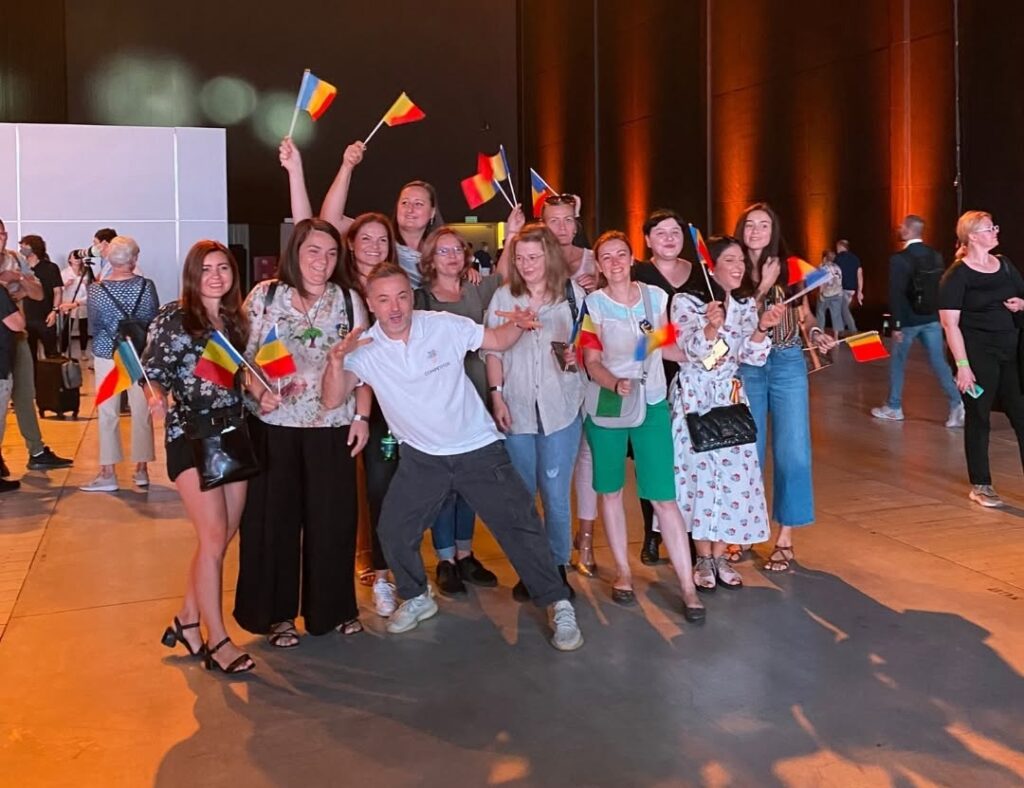
Role of competitions, professional communities and associations in raising standards
Question: What role do competitions, professional communities and associations such as AADF play in raising industry standards?
AADF: “The role of competitions, professional communities and membership of association structures such as the Romanian Association of Romanian Florist Entrepreneurs exceeds the scope of simple networking or visibility tools. In reality, they constitute the invisible infrastructure of professionalism and one of the few mechanisms capable of systematically producing standards in an area still in the process of identity sedimentation.
Professional competitions function as controlled exposure spaces for excellence, where individual practice is subject to evaluation, comparison and validation within a structured framework. Beyond their spectacular dimension, they have a deeply formative function: they force the clarification of aesthetic language, the refining of technique and, in particular, the lifting of the internal threshold of self-exigence. In such contexts, the standard is no longer only declared, but demonstrated, challenged and permanently recalibrated.
Professional communities, however, operate in a more subtle but not less essential logic. They create continuity where individual practice would tend to be isolated and fragmented. Inside them is the transfer of know-how, informal quality landmarks are formed and a collective memory of the profession is built over time. In the absence of these spaces, evolution risks becoming discontinuous, dependent exclusively on individual initiatives and unfiltered external influences.
In this overall, membership of an association structure such as AADF introduces an additional level of institutional coherence. Such an organisation becomes an active player in defining a professional reference framework: articulating principles, supporting continuous education, promoting ethical standards and facilitating dialogue between industry actors. Essentially, it functions as a mechanism for the aggregation of a job still dispersed, providing direction, consistency and visibility.
Overall, these three dimensions are constitutive, they actually produce professionalism. “
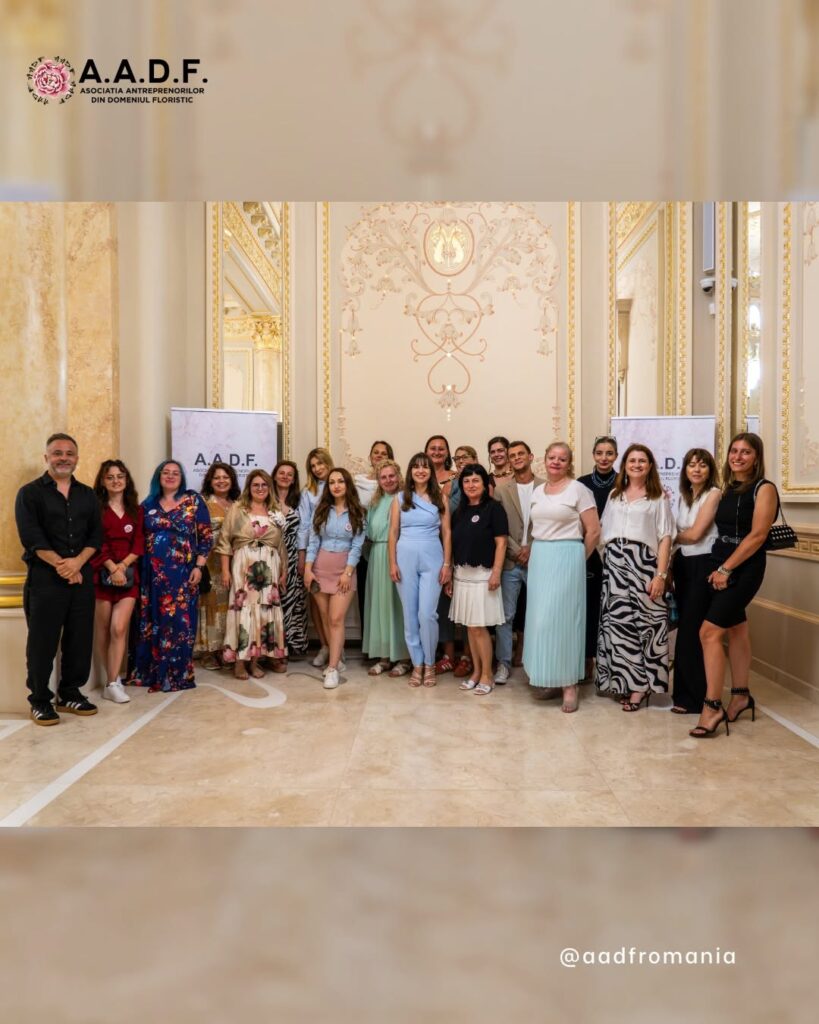
Long-term solutions for a healthier florist market
Question: What solutions do you see in the long term for a healthier market: certified education, collaboration between florists, professional standards, promotion of local flowers, technology, regulation or greater transparency?
AADF: “A” healthy “flower market (although I have previously detailed the term) is the result of a coherent set of factors that act simultaneously in a sense of structural interdependence. Certified education, collaboration between florists, professional standards, promotion of local production, integration of technology, increased regulation and transparency are complementary directions of the same process of growing the flower domain.
Each of these components responds to a specific vulnerability in the current architecture of the market. Certified education underpins competence and creates a common professional language. Cooperation between florists reduces professional fragmentation and isolationism. The promotion of local flowers strengthens the economic chain and reduces external dependency. Technology introduces efficiency, traceability and adaptability to the accelerated dynamics of contemporary consumption. Transparency in turn operates as a mechanism of trust and fairness between market players, reducing grey areas of commercial practice.
However, of all these directions, professional standards are central to the structural axis of the entire ecosystem. They have a dual function: on the one hand, they set a minimum accepted quality threshold, and on the other hand, they set an aspirational horizon of excellence. The maturity of a market is actually built between these two landmarks.
In this context alone, competition becomes constructive, quality becomes visible, and evolution turns from an individual effort into a collective, cumulative and sustainable process. “
An industry that matures through standards, collaboration and ownership
Overall, this conversation shows that Romania’s florist industry can no longer be understood simply by the beauty of the final product. Behind each bouquet, each workshop and each florist there is a complex chain of decisions, skills, responsibilities and vulnerabilities that directly influence the quality of services and business stability.
Professionalisation is therefore not an abstract term but a practical need. It means clearer standards, more coherent education, real collaboration between florists, healthy trade delimitation and a more mature relationship with technology, suppliers and the public. And the role of a professional community, such as AADF, becomes essential precisely because it can turn isolated initiatives into a common direction.
Romanian florist is still in a process of defining, between external influences, local creativity and the need for its own landmarks. But it is precisely this stage of construction that can become an opportunity. If industry assumes standards, protects its professional chain and invests in education, then its future will depend not only on trends or seasonality, but on the ability to build trust, value and continuity.
Related articles
More ideas from the same area

Business & Management / Florists & Stories
What commercial markup should I apply to flowers?
There is no universal commercial markup that is "correct" for all florists. A multiplier…

Business & Management / Florists & Stories
How to calculate the real margin on a flower bouquet
A practical method for calculating contribution margin from net revenue and the variable costs…

Romanian florists: professional standards, burnout and the need for digital tools
This continuation of the AADF discussion looks beyond polished bouquets and social-media images to…