Florists & Stories / Flower Guides & Inspiration / Supply & Flower Industry
10 cut flowers that last a long time in a vase and how to extend their lifespan
Are you looking for flowers that last? Cut flowers can instantly transform a room, an event, or a festive table, yet one of the most common questions from customers remains the same: "How long will the flowers last?" There is no single answer that applies to all species. Vase life depends on the variety, the freshness of the flower at the time of purchase, the temperature […]
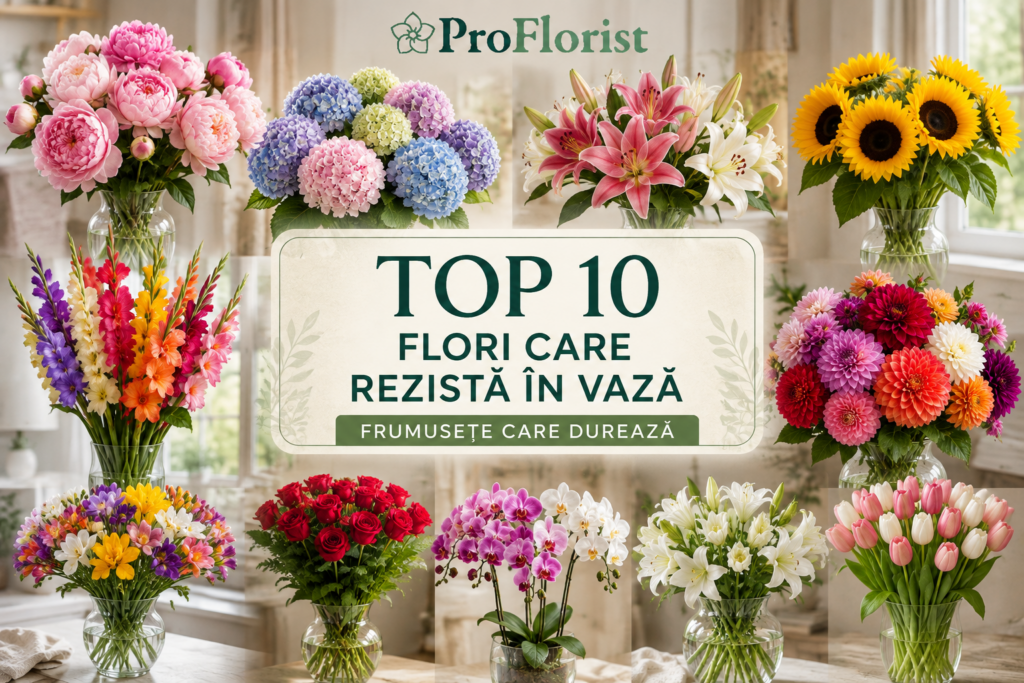
Are you looking for flowers that last? Cut flowers can instantly transform a room, an event, or a festive table, yet one of the most common questions from customers remains the same: “How long will the flowers last?”
There is no single answer that applies to all species. Vase life depends on the variety, the freshness of the flower at the time of purchase, storage temperature, transport, water quality, and the way flowers are cared for after they reach the customer.
Some flowers can look very good for almost two weeks or even longer under the right conditions, while others naturally have a shorter vase life. For florists and event organisers, choosing the right varieties can make a difference, especially when flowers need to be prepared in advance.
Below you will find 10 cut flowers known for their durability, as well as a few simple rules that can extend the freshness of a bouquet.
Also see this flower and plant care guide
What does a flower that lasts in a vase actually mean?
When we talk about “flowers that last a long time,” we should not only think about the number of days.
A good flower for professional use must withstand transport, handling, hydration, temperature changes, and working in a floral arrangement without losing its appearance quickly.
For a florist, durability also means fewer losses.
For a wedding planner or a floral designer, it means the possibility of starting preparations earlier and having more flexibility on the day of the event.
For the end customer, it simply means that the purchased bouquet stays beautiful for longer.
1. Chrysanthemum – one of the champions of durability
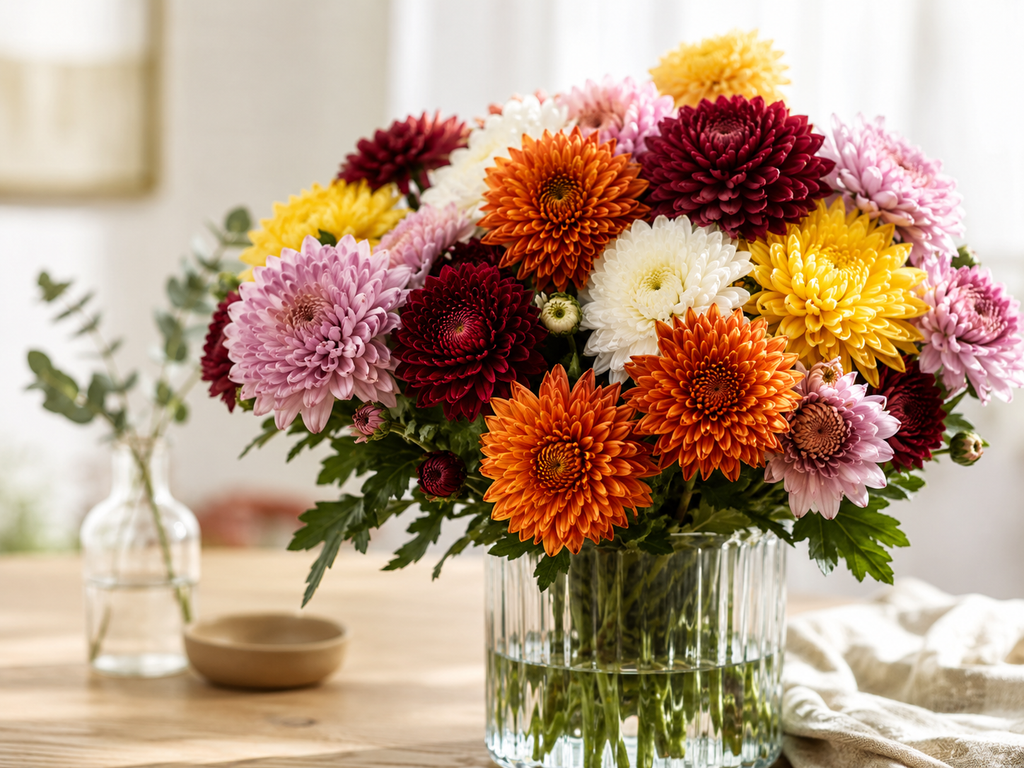
Botanical name: Chrysanthemum × morifolium
Chrysanthemums are among the most durable cut flowers available in florists.
They have the advantage of a very wide range of shapes, sizes, and colours, from small santini chrysanthemums to varieties with spectacular and voluminous inflorescences.
Under good conditions, many varieties can last two weeks or even longer.
For this reason, they are highly appreciated both in commercial bouquets and in event decorations.
Another important advantage for the florist is versatility. Chrysanthemums can be used in elegant, rustic, minimalist, or very rich arrangements.
In some European countries, there is a strong cultural association between chrysanthemums and funeral ceremonies, so the way they are used and presented must be adapted to the market and the client.
2. Zinnia – intense colour and good durability
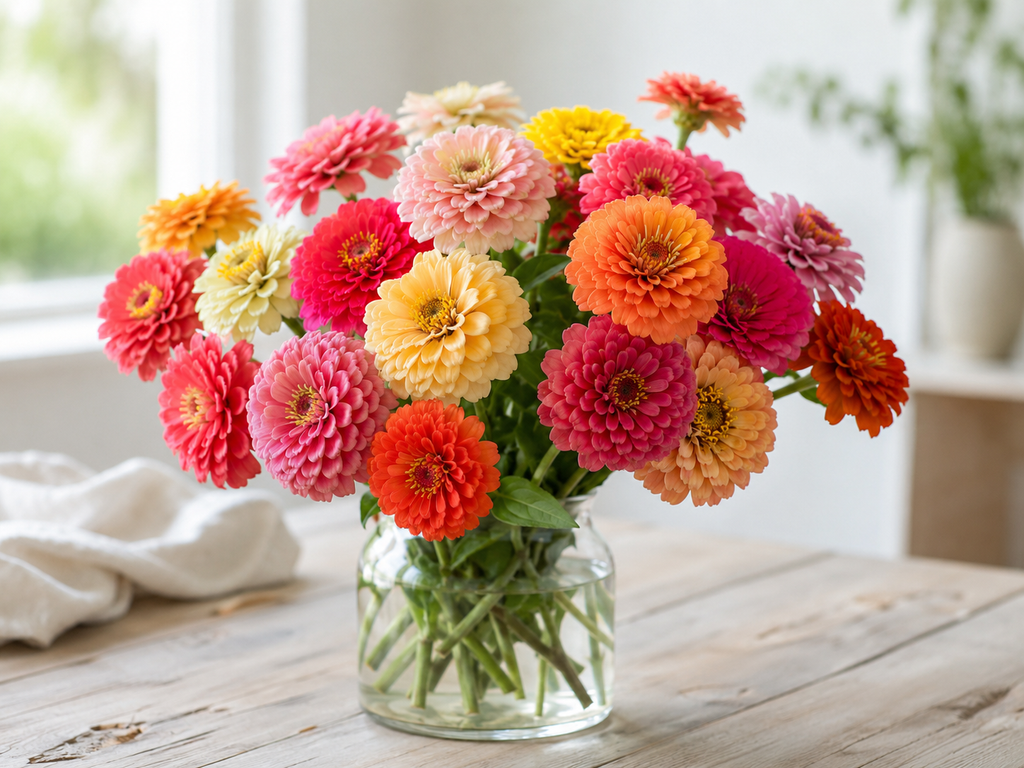
Botanical name: Zinnia elegans
Zinnia is a spectacular summer flower, appreciated especially for its strong colours.
Pink, orange, red, yellow, purple, or green – the available varieties offer many possibilities for floral design.
When harvested at the correct maturity and properly hydrated, zinnia can have very good vase life.
It is especially suitable for summer bouquets, outdoor events, garden-style decorations, and arrangements with a natural look.
For the florist, zinnia has an additional advantage: it can bring a lot of colour to a design without the need for a very large number of other varieties.
3. Orchid – elegance and longevity
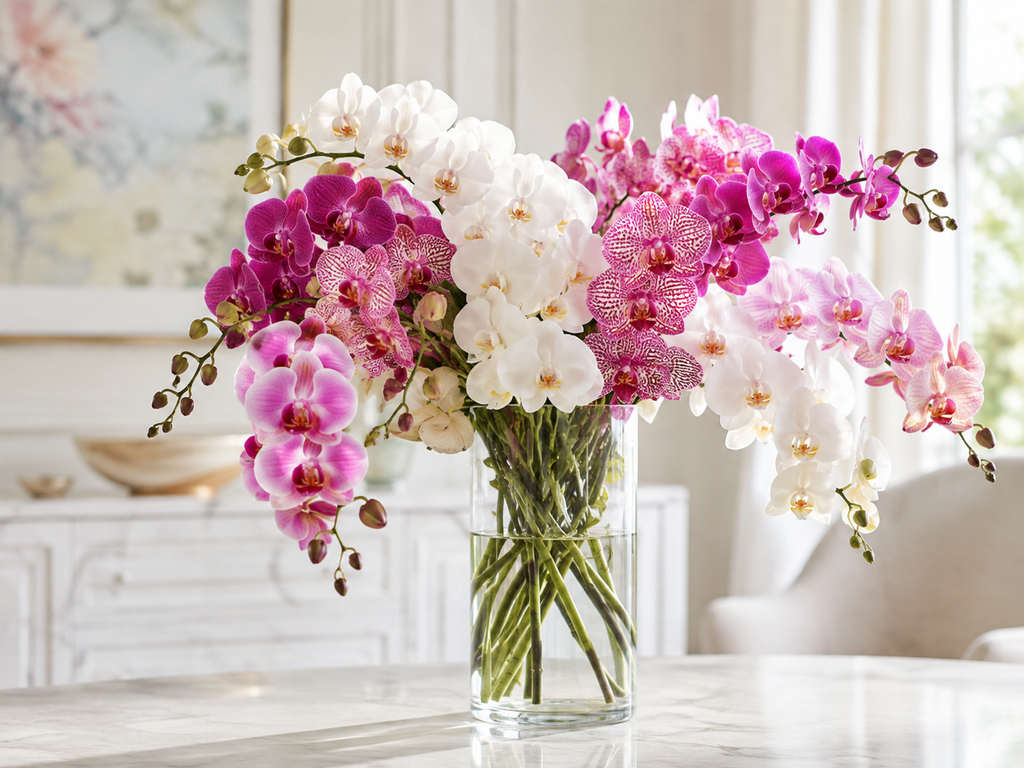
Botanical family: Orchidaceae
Orchids are probably among the easiest to recognize premium flowers in the floral industry.
Varieties such as Cymbidium, Dendrobium, or Phalaenopsis are frequently used in floral design, luxury events, and contemporary arrangements.
Some cut orchids have excellent durability.
This is one of the reasons why they are highly appreciated for important events, where flowers must look impeccable for many hours and withstand handling.
Orchids fit very well in:
- premium weddings;
- corporate events;
- hotel decorations;
- receptions;
- modern floral installations;
- minimalist arrangements.
Their exotic appearance allows the creation of strong compositions even with a relatively small number of flowers.
4. Freesia – fragrance and delicacy
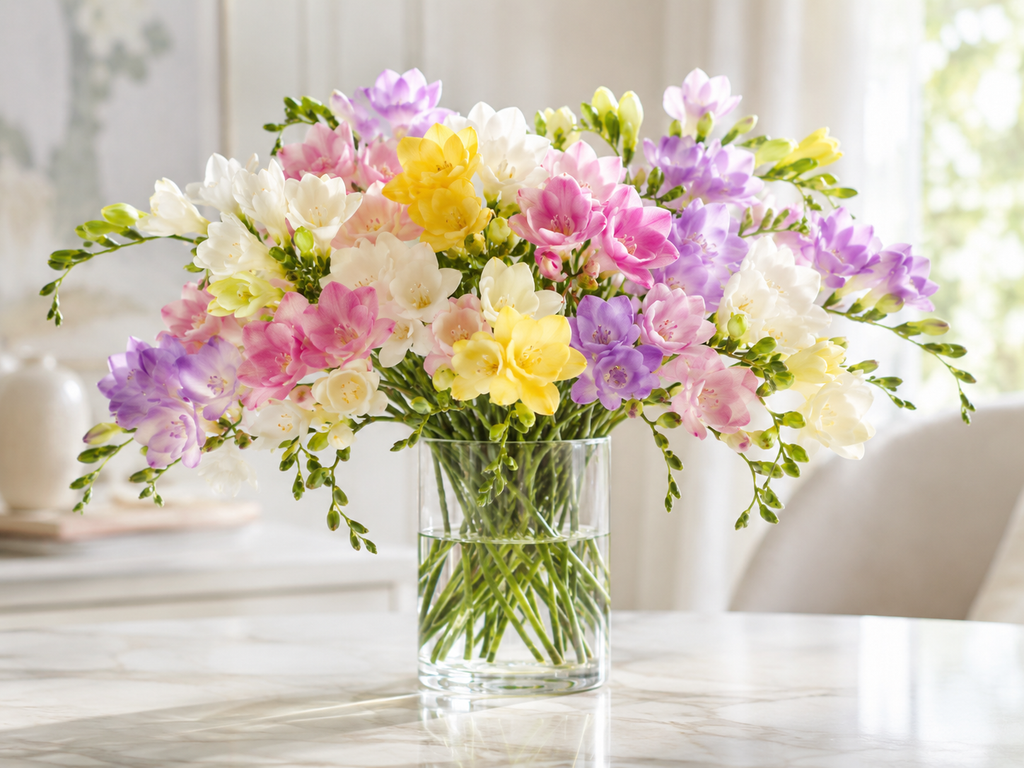
Botanical name: Freesia spp.
Freesia is appreciated both for its appearance and its fragrance.
The flowers appear along a curved stem and open progressively, which helps the bouquet change its appearance from day to day.
White, yellow, pink, purple, and orange varieties are very popular in floristry.
Freesia is frequently used for weddings due to its delicate and romantic appearance.
It is suitable for bridal bouquets, corsages, table arrangements, and garden-style compositions.
An important advantage is that the buds on the same stem can open gradually, which can prolong the feeling of freshness of the arrangement.
5. Lily – visual impact and gradual opening
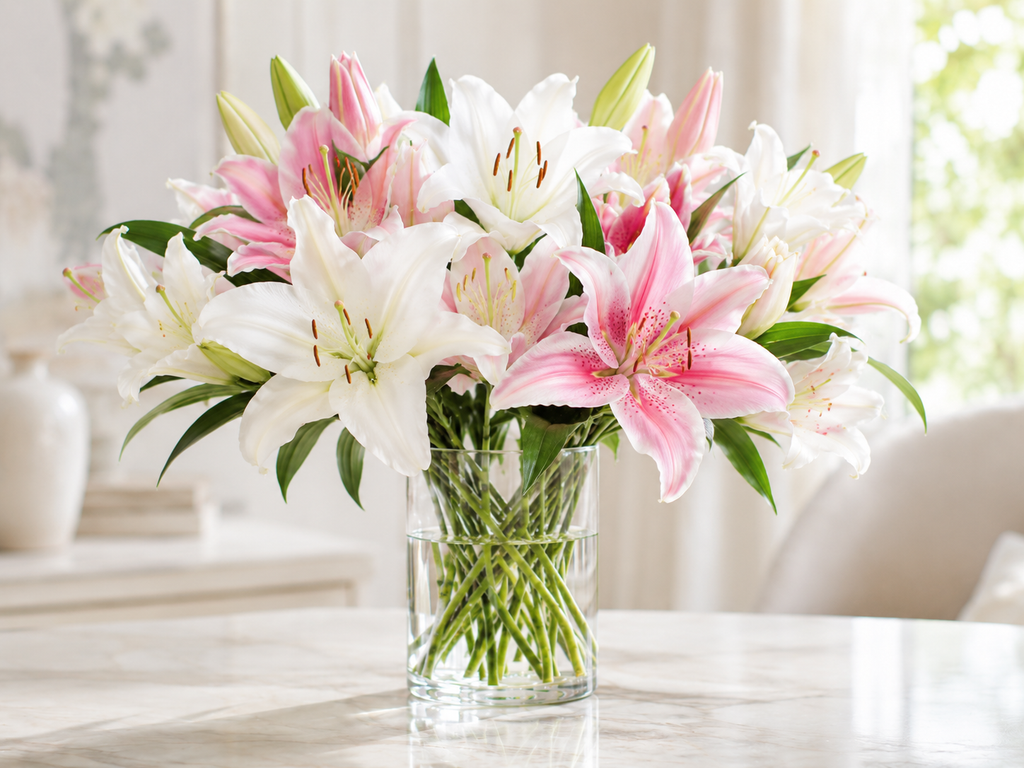
Botanical name: Lilium spp.
Lilies are among the most spectacular cut flowers.
A single stem can have multiple buds, and these open successively. For this reason, a bouquet with lilies can maintain its visual interest for several days.
In floristry, there are numerous varieties, from Asiatic lilies to oriental varieties with large flowers and intense fragrance.
Lilies are frequently used in:
- elegant bouquets;
- events;
- reception decorations;
- funeral arrangements;
- large-volume compositions.
Florists, however, must take pollen into account. In certain varieties, the anthers are removed after the flower opens to avoid staining clothes, tablecloths, or petals.
6. Sunflower – strong, cheerful, and spectacular
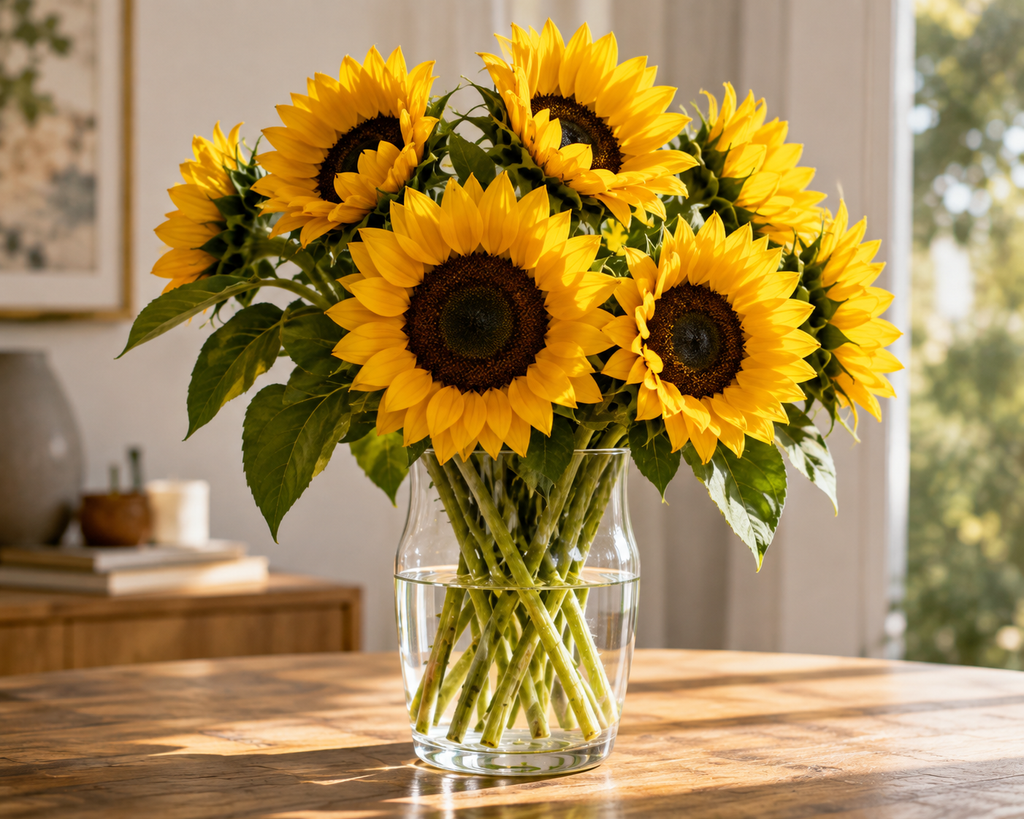
Botanical name: Helianthus annuus
The sunflower is one of the most recognisable seasonal flowers.
Its large flowers and intense colours make it suitable for summer and early autumn bouquets.
There are varieties specially grown for use as cut flowers, with sizes and shapes adapted to the floral industry.
In design, the sunflower can be used for:
- rustic weddings;
- outdoor events;
- summer bouquets;
- corporate decorations;
- shop windows;
- seasonal arrangements.
The stems need a lot of water, and proper hydration is important immediately after transport and processing.
7. Dahlia – spectacular, but in need of attention
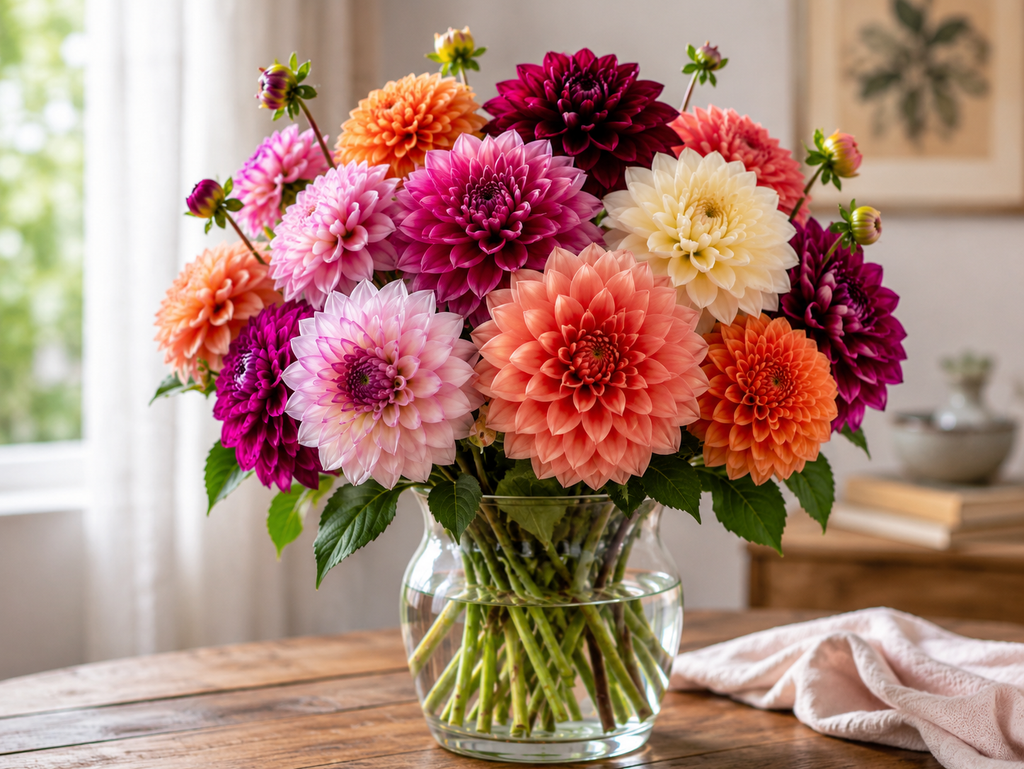
Botanical name: Dahlia spp.
Dahlia is one of the stars of summer and autumn floral design.
The shapes can vary greatly: pompon, ball, cactus, decorative, or dinnerplate.
Visually, few flowers can compete with a large dahlia in a floral arrangement.
However, one clarification is important: dahlia is not necessarily one of the longest-lasting cut flowers compared to chrysanthemums or certain orchids.
It is included in this list especially due to its popularity and the fact that, when fresh and well-hydrated, it can perform well for events.
For florists, sourcing is essential. A very fresh bought dahlia can make the difference between a decor that looks impeccable and one where the flowers quickly start to lose their shape.
8. The peony – a premium flower that should be selected carefully
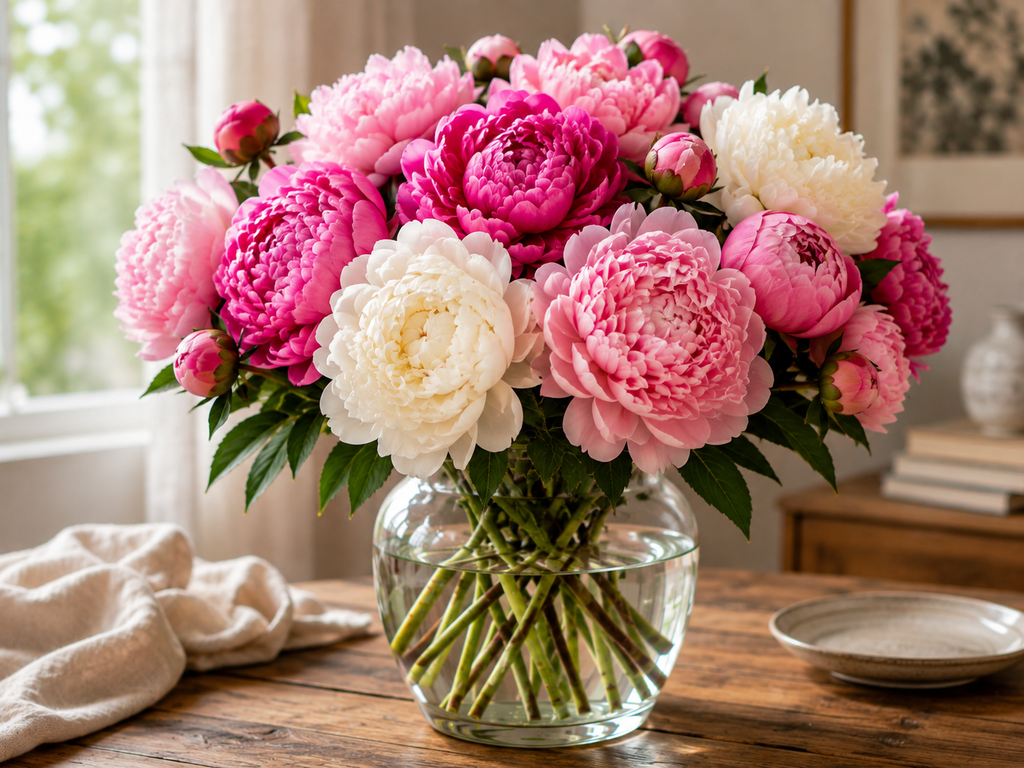
Botanical name: Paeonia spp.
The peony is one of the most desired flowers for weddings.
The romantic shape, volume, and the spectacular way in which the bud opens make it a premium product.
Just like with dahlias, peonies are not necessarily the absolute champions of longevity in a vase.
On the other hand, they have a very important advantage for florists: they can be purchased at different stages of opening and managed according to the event date.
A peony at the right stage can be kept and hydrated so that it reaches the ideal bloom exactly when needed.
That is why the florist’s experience matters enormously.
For weddings, peonies are often combined with roses, lisianthus, freesia, ranunculus, and greenery.
9. Gladiolus – height and presence
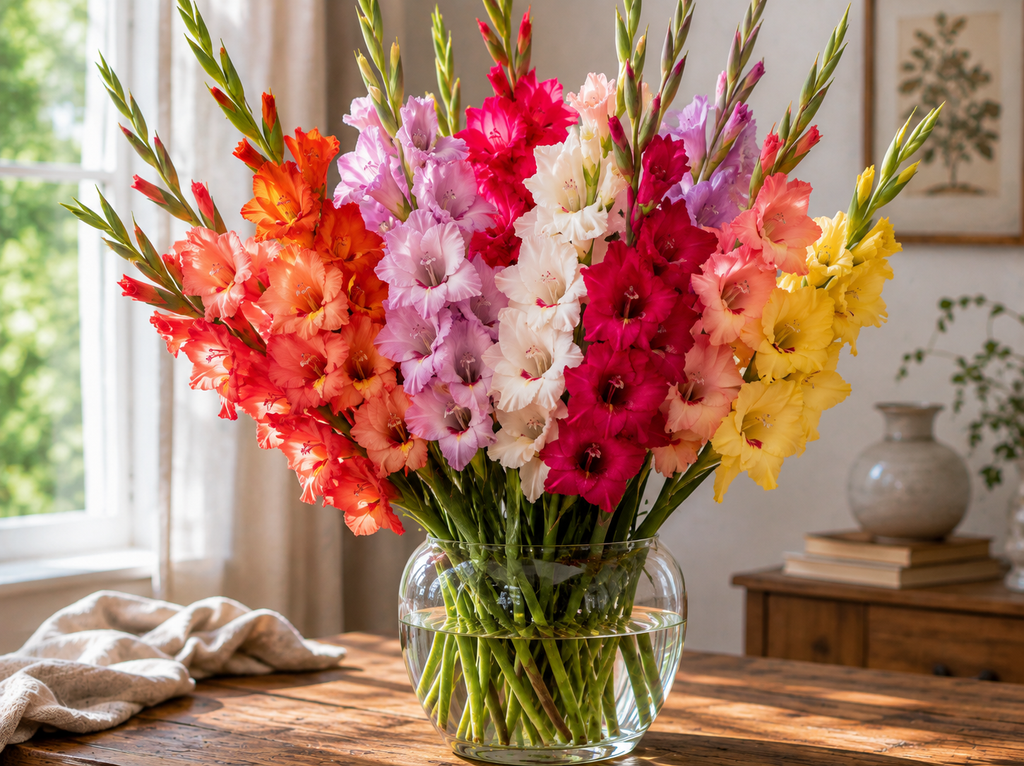
Botanical name: Gladiolus spp.
Gladioli are ideal when an arrangement needs height.
The long stem and progressively opening flowers create a strong vertical effect.
They can be used both in traditional floristry and in modern installations, where vertical lines become part of the design architecture.
A major advantage of gladioli is that the flowers on the stem do not all open simultaneously.
As the lower flowers mature, those above continue to open.
For large event arrangements, gladioli can provide a very good balance between volume, height, and visual impact.
10. Hydrangea – spectacular volume from a single stem
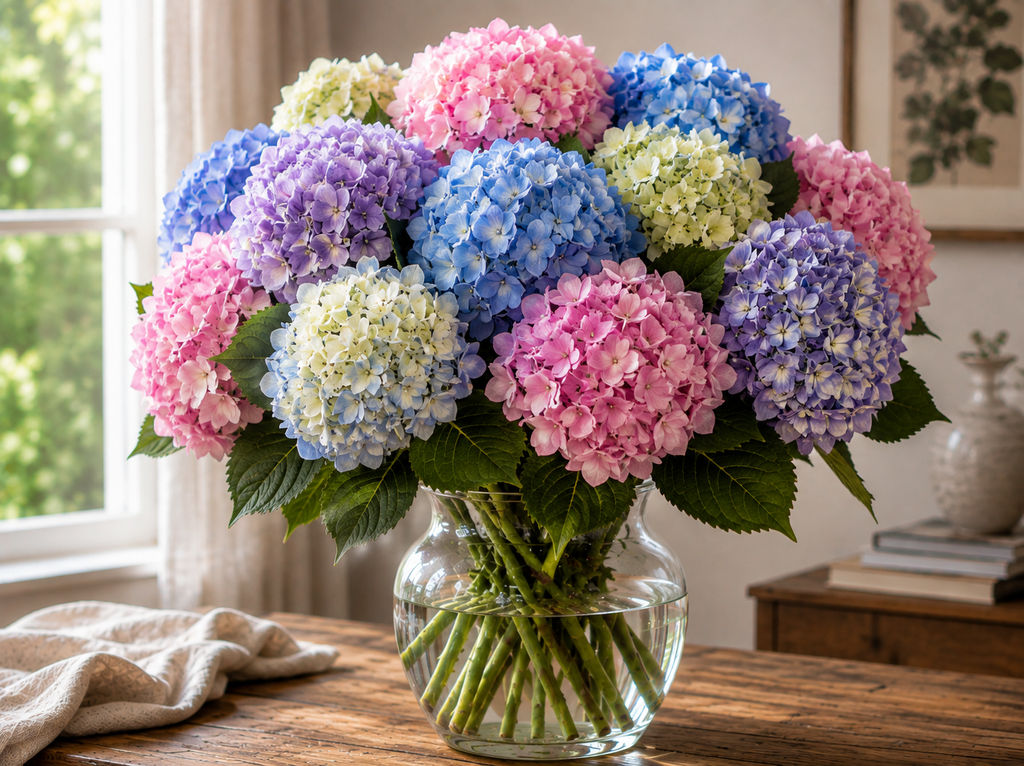
Botanical name: Hydrangea spp.
The hydrangea is one of the most used flowers in wedding design.
A single stem can provide a volume that other flowers achieve only by using multiple specimens.
It is available in a very wide range of colours: white, green, pink, blue, purple, burgundy, and numerous transition shades.
However, the hydrangea is a flower with high water needs.
If dehydrated, it can seem completely compromised in a very short time. In many cases, however, if the problem is noticed quickly and the flower is properly rehydrated, it can recover.
For events, the hydrangea is excellent for:
- table arrangements;
- arches;
- floral installations;
- stage decor;
- bridal bouquets;
- hotel decorations.
How long do cut flowers actually last?
It’s tempting to say that a certain flower “lasts 14 days,” but in floristry things are more nuanced.
Two bouquets made with the same variety can have very different durations.
It matters:
how fresh the flower was when purchased, how it was transported, if it was kept cold, how long it was without water, water quality, and room temperature.
For florists, a reliable supply chain is therefore more important than choosing only species described as “long-lasting”.
How to extend the life of cut flowers
Regardless of the variety, a few simple rules can make a significant difference.
1. Always start with a clean vase
One of the biggest enemies of cut flowers is bacteria in the water.
A vase that appears clean may still have biofilm or microorganisms that block the stem vessels.
The vase must be washed very well before use.
In a professional flower shop, the hygiene of containers and processing buckets should be part of the daily routine.
2. Cut the stems again
Before the flowers are placed in water, it is recommended to recut the stems with a well-sharpened tool.
This creates a new surface through which the flower can absorb water.
The scissors or knife used must be clean.
A dirty tool can introduce bacteria directly into the plant tissue.
3. Remove the leaves that reach the water
No leaf should remain below the water level.
Leaves submerged in water begin to degrade and contribute to the development of bacteria.
For professional florists, this is one of the simplest ways to reduce losses.
4. Use professional cut-flower food
Flower food is not just an accessory included in the bouquet.
Professional products are formulated to support hydration, control microorganisms, and provide the nutrients necessary for the flower after cutting.
For the end customer, the packet received from the florist must be used according to the instructions, including the correct amount of water.
More product does not automatically mean better results.
5. Change the water regularly
If the water becomes cloudy, it is a sign that it needs to be changed.
Depending on the flower and room conditions, changing the water every few days can help maintain a cleaner environment.
The vase must be rinsed, and the stems can be easily trimmed.
6. Keep flowers away from heat and direct sunlight
Cut flowers do not need direct sunlight.
On the contrary, high temperatures accelerate transpiration, ripening, and water loss.
A bouquet placed near a radiator, in a sunheated display case, or near a source of warm air can significantly reduce its lifespan.
A cool environment helps.
7. Do not keep flowers near ripe fruit
Some fruits release ethylene as they ripen.
Ethylene accelerates the aging of certain flowers and can cause petals to fall or premature aging.
That is why a spectacular bouquet and a bowl of fruit are not always the best neighbors.
8. Remove flowers that are deteriorating
If a flower in a bouquet starts to spoil, it does not need to be kept just because the rest of the arrangement is still beautiful.
Removing damaged plant material helps both aesthetically and from the point of view of water hygiene.
Sometimes a bouquet can be ‘reconstructed’ after a few days by removing the spent flowers and rearranging the ones that remain.
Which flowers to choose when longevity is a priority?
For a customer who clearly states that they want a bouquet that lasts as long as possible, chrysanthemums and certain varieties of orchids are among the first options a florist can consider.
For events, the choice is more complex.
There, it matters not only how long the flower lasts in the vase, but also:
- how long it can stay out of water;
- how it reacts to temperature;
- whether it will be used in floral foam or a water system;
- how early the decoration needs to be done;
- whether the event is indoor or outdoor;
- how warm it is in the venue;
- how long the transportation is.
This is the difference between simply choosing flowers and professional floristry.
Longevity begins before the flower reaches the vase
The most important thing to remember is that the lifespan of a flower does not begin when the customer places the bouquet on the table.
It begins at the producer.
The moment of harvesting, pre-cooling, transport, cold chain, storage, processing at the wholesaler, and the way the florist handles the product all contribute to the final result.
That is why, for industry professionals, the quality of the flower and the correct handling of the cold chain are as important as the chosen variety.
A good florist does not just sell a beautiful bouquet at the moment of delivery.
They also sell the experience of the following days.
And when the customer sees that the flowers they bought continue to look good, the likelihood of returning to the same flower shop increases.
For the floral industry, the longevity of flowers is not just a matter of care.
It is also a matter of quality, reputation, and business.
Related articles
More ideas from the same area

Business & Management / Florists & Stories
How to calculate the real margin on a flower bouquet
A practical method for calculating contribution margin from net revenue and the variable costs…
Business & Management / Florists & Stories
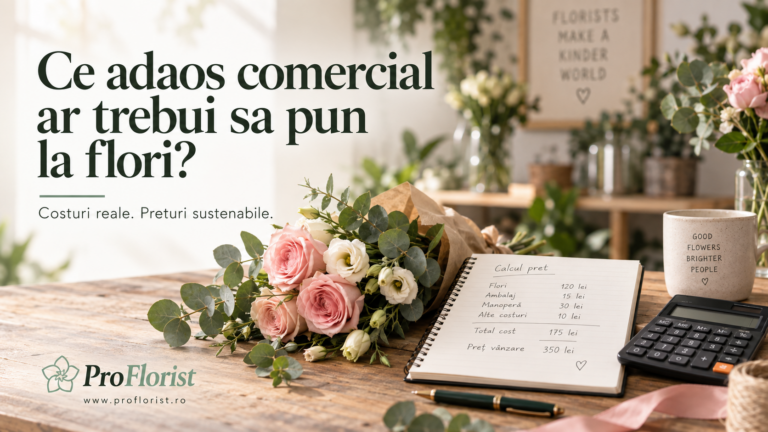
What commercial markup should I apply to flowers?
There is no universal commercial markup that is "correct" for all florists. A multiplier…
Seasonal flowers: what to check before choosing a catalogue design
A seasonal photograph does not guarantee availability. Before ordering, check the actual composition, colours…