Education & Floral Design / Supply & Flower Industry
Madrid Blooms: an international congress for floristry and floral design
Madrid Blooms brings floral designers and industry professionals together to discuss floral architecture, education, branding and storytelling. This report presents the event and its speakers in their international floristry context without treating individual presentations as commercial endorsements.
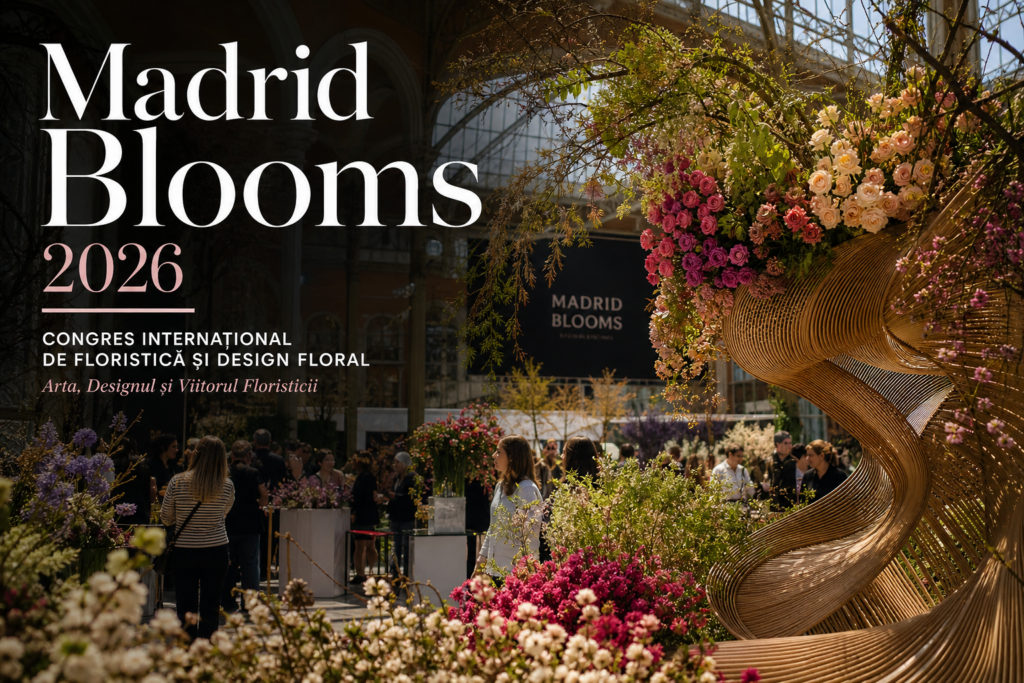
What Madrid Blooms is and why it matters internationally
Evolution of the event and international impact
Why attract designers and florists from around the world
Madrid Blooms 2026: when flowers become art
Turning the flower from executor to concept creator
The role of visual identity and storytelling in floral design
Major trends in contemporary floral design
Minimalism, structure and influence of Ikebana
Floral material as artistic language: volume, texture and negative space
Sustainability in floristry: from trend to working principle
Green alternatives and changing customer mentality
How business decisions of florists influence sustainability
Reinterpreting classic flowers and exploring new creative directions
Why flowers like carnation or lily return to trends
How to transform an ordinary flower into a premium element
The global exchange of styles and its impact on Romanian floristry
Missing regional differences in floral design
How to build your own style in a global market
Education and continuing development in floristry
Role of international workshops and events
Why continuous learning makes the difference between a local workshop and a premium brand
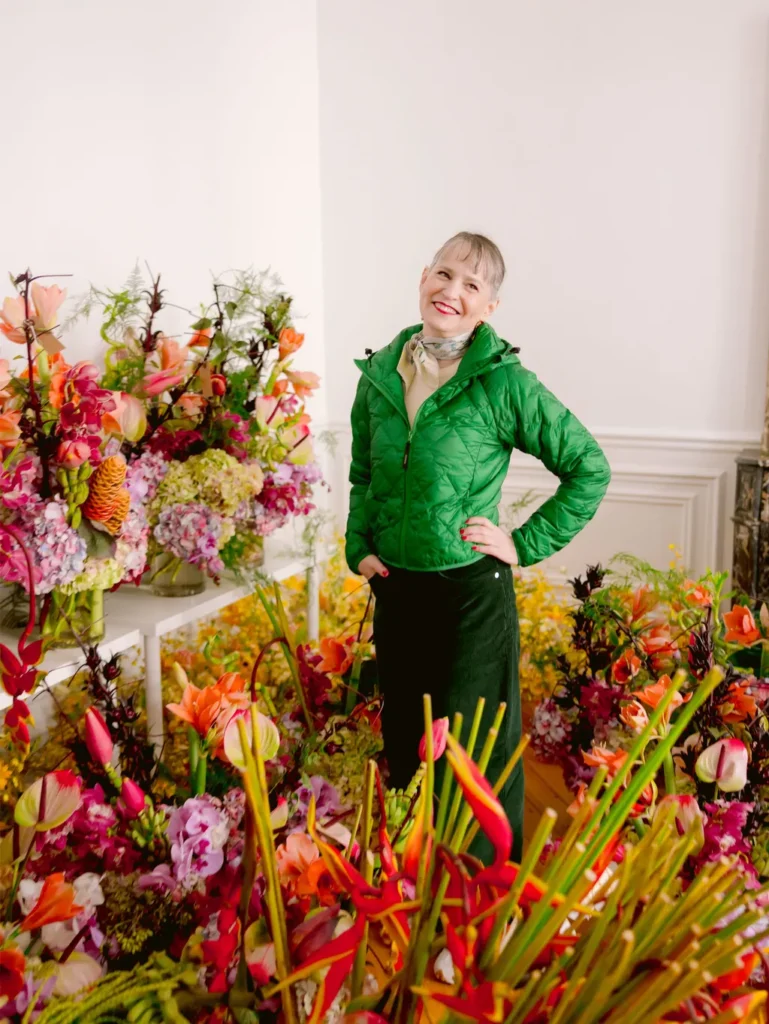
(Credit Image: Facilitate Photography)
Madrid BloomsThe international congress of florist and floral design marks a profound change in industry, where floristry evolves from decorative activity into a form of conceptual art. The event highlights the importance of visual identity, sustainability and continuing education for florists. For Romanian professionals, Madrid Blooms 2026 offers valuable lessons on how to develop its own style, meet new customer requirements and transform flowers into memorable experiences, not just products.
From bouquets to concepts: a new era of floristry
In recent years, floristry industry has passed through a profound transformation, and events such as Madrid Blooms 2026 unequivocally confirm this paradigm shift. If in the past the focus was almost exclusively on the aesthetics of the arrangements and the technical execution, today the florist is becoming increasingly clear in the visual arts area, where the concept, emotion and identity become essential elements. For the ProFlorist community and all those working in the field, this development is not just an international trend, but a reality that is beginning to directly influence the Romanian market, including in dynamic cities such as Bucharest.
Madrid Blooms, an international congress of florist and floral design, is not only a spectacular event, but a platform of ideas, innovation and education. By bringing together designers, suppliers and creatives from dozens of countries, it provides a clear picture of where the industry is going. From the ProFlorist perspective, which supports the development and professionalism of florists through educational content and dedicated solutions, such events become key benchmarks for understanding new standards.
For florists in Romania, access to information and inspiration has never been easier, but this global opening also brings increased pressure: to differentiate. Madrid Blooms 2026 clearly shows that it is no longer enough to create “fair” or pleasant visual arrangements. The audience seeks experiences, stories and authenticity, and the florist becomes a creator who translates emotions into shapes, colours and textures.
This article aims to explore in depth the lessons offered by Madrid Blooms 2026 and translate them into a practical guide for florists, entrepreneurs and floral design enthusiasts. You will discover how the role of the flower changes, what are the major trends in design, why sustainability becomes an essential criterion and how you can transform this information into a real advantage for your business.
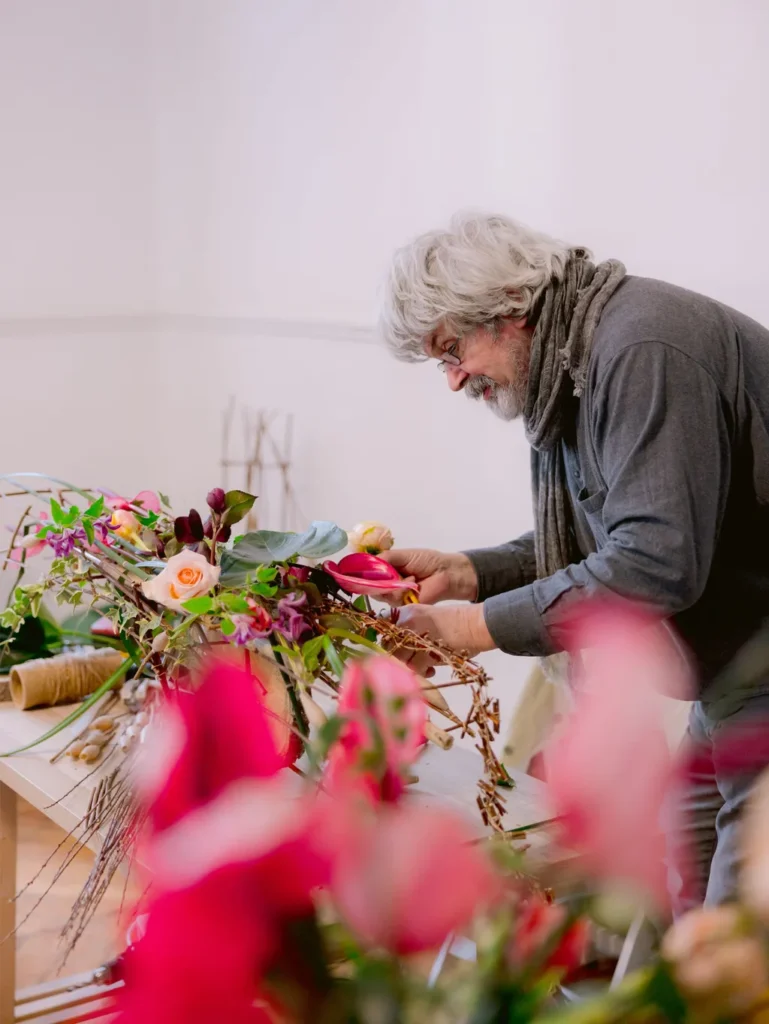
(Credit Image: Facilitate Photography)
What Madrid Blooms is and why it matters internationally
Madrid Blooms, an international congress of florist and floral design, is not just a spectacular event for flower lovers, but a complex platform in which future directions meet in industry. Organised annually in the capital of Spain, this congress brings together flower designers, producers, suppliers and educators from around the world, transforming into a space where ideas circulate freely and professional standards are constantly redefined. The atmosphere is vibrant, where the subtle smell of fresh flowers intertwines with the sound of conversations about techniques, concepts and innovation.
The evolution of the event is remarkable. Since an initiative dedicated to the local florist community, Madrid Blooms has quickly become an international landmark, attracting an international audience. This cultural diversity contributes to an extraordinarily rich palette of styles, influences and approaches, giving participants a global perspective on floral design. For florists in Romania, including those connected to the ProFlorist ecosystem, such events are a rare opportunity to understand what the global market looks like and what customers expect more and more sophisticated.
Why attract Madrid Blooms so much interest? Because it’s not just about flowers, it’s about ideas. It is the place where floristry meets architecture, fashion and contemporary art, and this mix creates a context in which each participant is challenged to think differently. For a florist in Bucharest or any other city in Romania, this opening can mean the difference between an ordinary workshop and an inspiring brand.
Madrid Blooms 2026: when flowers become art
The 2026 edition strengthened an idea that had been floating for some time in the industry: floristry is no longer just decor, but art. Madrid Blooms 2026 has put into focus the transformation of the flower from the executor into a creator of concepts. In the demonstrations and installations presented, each arrangement told a story, each choice of colour or texture had a well-defined meaning, and the final result far exceeded the idea of “beautiful arrangement.”
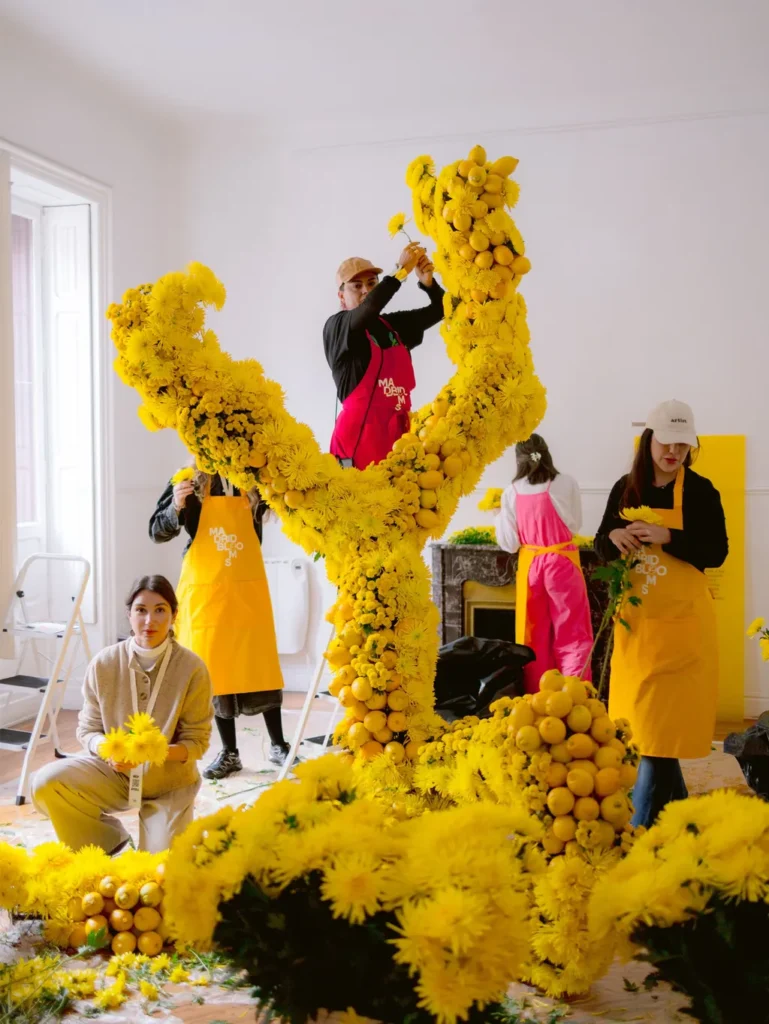
Discover Madrid Blooms 2026 floral designers
This change is fuelled by global access to inspiration and the social media role, which has accelerated the exchange of ideas between cultures. Today, a Romanian florist can observe in real time trends in Tokyo, New York or Amsterdam, and this constant exposure raises standards. At the same time, it creates a pressure: to have a clear identity. It is no longer enough to execute a bouquet impeccably; you must convey an emotion, create an experience.
The role of visual identity thus becomes essential. Florists who manage to differentiate are those who develop a recognizable and coherent style. In the ProFlorist ecosystem, this direction is increasingly visible, as more and more professionals understand that personal branding and storytelling are as important as technique.
Major trends in contemporary floral design
One of the most discussed topics in Madrid Blooms is the contemporary design and direction in which it evolves. Highly influenced by the principles of Ikebana, modern floral design places emphasis on intention and balance. Each element is carefully chosen, each line has a role, and negative space becomes as important as the floral material itself. The result is an aerated but deeply expressive composition.
Minimalism does not mean using fewer flowers, but using exactly as much as is necessary to send a clear message. Volume and proportion control becomes essential and florists are encouraged to constantly “edit” what they create. Instead of adding elements to fill space, they are invited to remove excess and preserve the essence.
The floral material thus becomes an artistic language. The velvet texture of a petal, the stiffness of a strain or the contrast between the colours becomes instruments of expression. In Madrid Blooms, many of the installations have shown how these elements can be used to create emotion, almost like in a work of plastic art. For Romanian florists, this approach opens up new creative possibilities and offers a competitive advantage in a constantly evolving market.
Sustainability in floristry: from trend to working principle
Another central topic of Congress was sustainability, which is no longer perceived as a trend, but as a necessity. Premium floristry is increasingly moving away from polluting materials and is looking for alternative solutions such as reusable structures or biodegradable materials. The classic floral sponge, for example, is increasingly contested, and designers are experiencing new ways to support the arrangements.
This change comes not only from the desire for innovation, but also from consumer pressure, which is becoming more aware of the environmental impact. Customers in Romania, especially in urban areas, are starting to ask questions about the origin of flowers and how the arrangements are made. For florists, this translates into an opportunity to differentiate through sustainable practices.
For ProFlorist’s editorial coverage, environmental claims should be specific, verifiable and connected to visible working practices. Communication of these values also becomes a powerful marketing tool capable of attracting an educated and involved audience.
Reinterpreting classic flowers and exploring new creative directions
An interesting phenomenon highlighted in Madrid Blooms is the return to the foreground of some once-trivial flowers. The carnation, lily or other traditional varieties are reinterpreted in the light of contemporary design, becoming central elements in modern compositions. This shift of perception shows that the value of a flower is not only given by its scarcity, but by the way it is used.
Designers explore the textures, shapes and sculptural potential of these flowers, turning them into pieces of resistance. A carnation, for example, can become spectacular when used in a minimalist composition or combined with unexpected elements. This approach gives the florists more freedom and allows them to create impressive arrangements without relying solely on expensive premium flowers.
For the Romanian market, this trend is extremely relevant. Access to local varieties and lower costs can become strategic advantages if integrated into smart design. ProFlorist’s editorial content presents this as one possible direction and does not certify the environmental performance of individual products or businesses.
The global exchange of styles and its impact on Romanian floristry
Globalisation has radically changed the way floral design is perceived. If there were clear differences between regional styles in the past, these borders are fading today. Florists around the world have access to the same sources of inspiration, and the result is a uniformity of trends, but also a more intense competition.
For a Romanian florist, this can be both a challenge and an opportunity. On the one hand, standards are higher, and customers have more sophisticated expectations. On the other hand, access to information and inspiration offers the opportunity to create works internationally without leaving the country.
Building a style becomes essential. In a world where everyone sees the same images and follows the same trends, the difference makes it authentic. Florists who manage to define a clear identity and communicate it effectively will have a significant competitive advantage.
Education and continuing development in floristry
Madrid Blooms clearly demonstrates that education is an essential pillar of success in floristry. The event is not just an exhibition, but an educational platform where participants can learn directly from some of the best designers in the world. Workshops, demonstrations and discussions offer practical insights, which can be applied immediately to daily activity.
For Romanian florists, investment in education is becoming increasingly important. The difference between a local workshop and a premium brand is given not only by location or prices, but by the level of knowledge and the ability to innovate. In ProFlorist, the focus on education and continuous development reflects this reality.
In a constantly changing industry, those who remain curious and open to new will always have an advantage. Madrid Blooms is not only an event, but a symbol of this development and a reminder that floristry, at the highest level, is a combination of art, technique and vision.
What is Madrid Blooms and why is it considered an important international flower congress?
Madrid Blooms, an international flower and floral design congress, is one of the most relevant global events in the industry, bringing together designers, florists and international suppliers. It provides access to innovative trends, techniques and concepts. For the ProFlorist community in Romania, the event is a valuable source of inspiration and education, contributing to the development of a modern and competitive style.
What does it mean to treat floristry as art at Madrid Blooms 2026?
Madrid Blooms 2026 highlights the transformation of floristry from decorative activity into a form of artistic expression. The arrangements are not only aesthetic anymore, they transmit emotions and concepts. Florist becomes a creator of visual identity, and floral design involves storytelling, structure and intent. This approach is also increasingly relevant to florists in Bucharest and throughout Romania.
What trends in floral design were highlighted in Madrid Blooms?
The major trends presented in Madrid Blooms, the international congress of florist and floral design, include minimalism inspired by Ikebana, use of negative space, emphasis on texture and structure, and reinterpretation of classical flowers. Design becomes more intentional and artistic, and these directions are increasingly adopted by florists connected to platforms such as ProFlorist.
Why is sustainability important in modern floristry?
At Madrid Blooms, sustainability was presented as an important working priority rather than a short-lived trend. The focus in Madrid Blooms 2026 was on ecological alternatives to floral sponge and on reducing environmental impact. Florists considering lower-impact practices should assess materials, sourcing, durability and disposal rather than assume that any single method is automatically sustainable.
How does globalisation influence floral design styles?
Globalisation has eliminated clear differences between regional styles and florists around the world have access to the same sources of inspiration. Madrid Blooms shows that styles become universal and the competition is larger. For florists in Romania, this means the opportunity to create to international standards, but also the need to develop a style of its own to differentiate.
Why is continuing education important for a florist?
Continuous education is essential in a rapidly changing industry. Events such as Madrid Blooms offer access to new techniques, modern concepts and valuable networking. ProFlorist supports this direction, providing resources and inspiration for Romanian florists. Those who invest constantly in their professional development are more likely to become premium brands and relevant in the market.
Take your floral creativity to the next level with ProFlorist
In an industry where Madrid Blooms, an international flower and flower design congress, constantly redefines standards, it is essential to stay connected to trends, education and real growth opportunities. ProFlorist offers you exactly this framework: a platform dedicated to Romanian florists who want more than execution – they want to create, inspire and build an authentic brand. If you want to develop your style, attract better customers and be part of a professional community, contact the ProFlorist team to find out how we can help you concrete. Consult the local ProFlorist website for current information and available contact routes.
Related articles
More ideas from the same area
Software & Digitalisation / Supply & Flower Industry
Floristry enters the AI era: from the greenhouse and supply chain to florist and customer
Artificial intelligence is beginning to influence the flower industry, from crop planning and distribution…
Florists & Stories / Flower Guides & Inspiration / Supply & Flower Industry
10 cut flowers that last a long time in a vase and how to extend their lifespan
Are you looking for flowers that last? Cut flowers can instantly transform a room,…
Why supermarkets distort customers’ perception of flower prices
A low-cost supermarket bunch is not directly comparable with a bespoke arrangement from a…