Business & Management / Florists & Stories
A Complete Guide: Choosing a Career in Floristry and Your Real Options
The floristry industry has long since moved beyond simple bouquets sold hastily on street corners. Today, floristry has evolved into a complex creative field that blends art, entrepreneurship, marketing, and customer relations. It is precisely this diversity that makes choosing a career path both fascinating and challenging. Unlike […]
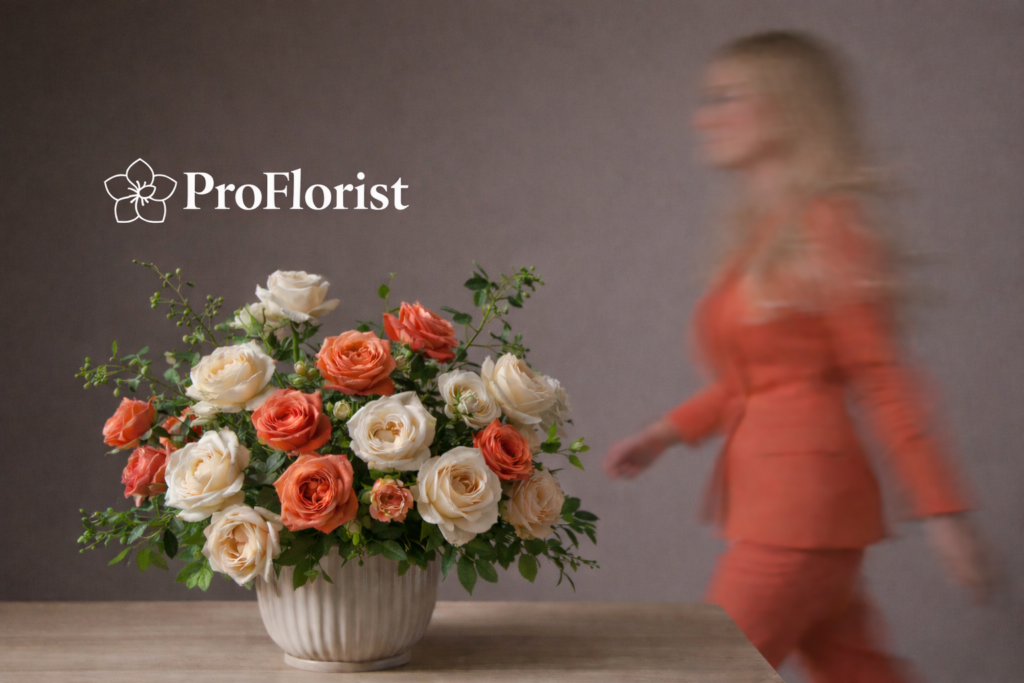
The floristry industry has long since moved beyond simple bouquets sold hastily on street corners. Today, floristry has evolved into a complex creative field that blends art, entrepreneurship, marketing, and customer relations. It is precisely this diversity that makes choosing a career path both fascinating and challenging.
Unlike other fields where the career path is relatively linear, floristry offers multiple directions, each with its own unique challenges, benefits, and lifestyle. For a florist just starting out—or even an experienced professional seeking a change—making the right choice can mean the difference between an exhausting career and a truly fulfilling one.
Event florist: the adrenaline behind perfect moments
Event floristry is undoubtedly one of the most visible and spectacular branches of the industry. It is a field where creativity reaches its peak, and your work becomes part of some of the most important moments in people’s lives: weddings, christenings, corporate events, or brand launches.
An event florist does not merely create arrangements; they build visual experiences. For instance, wedding floral décor might include not only bouquets and table centerpieces but also suspended structures, floral arches, or complex installations that completely transform the space.
Yet, beyond the aesthetics, this line of work requires impeccable organization. Deadlines are strict, installations often take place at night or in the early morning, and any mistake can impact a once-in-a-lifetime event. A florist must communicate effectively with wedding planners, event designers, and clients, manage budgets, and find quick solutions to unforeseen issues—such as replacing flowers that failed to arrive on time.
Floristry courses: how to turn passion into inspiration for others
In recent years, interest in floristry courses has grown significantly, opening up a real opportunity for florists who want to become educators. This path involves not only teaching techniques but also the ability to guide students in developing their own style.
A good educator knows how to simplify seemingly complex processes. For instance, creating a spiral bouquet might seem difficult for a beginner, but when explained correctly—step by step—it becomes accessible and even enjoyable.
Beyond the practical aspects, educators must also understand the business side: how to promote their courses, create engaging online content, and build a community. Many successful educators combine in-person workshops with online courses, thereby reaching a much wider audience.
Floral workshop or freelancing: total freedom, but with discipline
Freelance floristry is perhaps the most flexible option in the industry. Freelancers are not tied to a single employer or type of project—they can work for multiple flower shops, participate in events, or take on one-off projects.
This option is ideal for those who want to experiment. For instance, a freelance florist might work on a luxury event one week, and the next, help out at a flower shop during the busy Valentine’s Day or March 8th periods.
However, freedom comes with responsibility. Income is not constant, and success depends on the ability to build relationships and self-promote. Networking becomes essential—recommendations and collaborations are what bring the most opportunities.

Flower shop owner: balancing creativity and entrepreneurship
For many, the ultimate dream is owning their own flower shop. Yet, the reality is far more complex than it appears at first glance. Beyond the creative aspect, a flower shop owner must manage inventory, suppliers, staff, costs, and marketing strategies.
For example, choosing the right product range can make the difference between profit and loss. It is not enough to have beautiful flowers—you need to know what sells, when, and at what price.
Furthermore, the customer experience is becoming essential. A successful florist doesn’t just sell products; they create emotions. The way a bouquet is wrapped, the interaction with the customer, and the speed of delivery all contribute to building customer loyalty—whether the business is an online shop or a brick-and-mortar store.
The editorial floral designer: art without commercial limits
Editorial floristry is a realm where creativity is not constrained by client preferences, but rather guided by artistic vision. This is where arrangements are created for photoshoots, magazines, advertising campaigns, or artistic projects.
For instance, an editorial designer might work on a fashion campaign where flowers become part of the set design or even the model’s styling. In this context, there are no strict rules—unusual combinations, bold colours, and atypical shapes are encouraged.
This path is ideal for florists looking to build an impressive visual portfolio and gain industry recognition. However, it is also one of the most competitive areas, where collaborations and exposure matter immensely.
The florist offering flower subscriptions: stability in an unpredictable field
In an industry often driven by seasonality, the subscription model has become increasingly popular. It involves the periodic delivery of arrangements to clients—whether individuals or businesses (hotels, restaurants, offices).
For example, a restaurant might require fresh table arrangements on a weekly basis, while an office might opt for consistent floral decor for its reception area.
The major advantage is revenue predictability. Instead of relying solely on peak periods, you benefit from a steady stream of orders. The challenge, however, lies in maintaining high quality and variety without driving up costs.
How do you choose the right path?
Choosing a career in floristry shouldn’t be based solely on trends or what appears “most spectacular.” It is essential to analyze your own work style, energy levels, stress tolerance, and long-term goals.
If you enjoy the adrenaline rush and teamwork, event work might be the right choice. If you prefer stability, subscription services or owning your own flower shop are safer options. And if you are drawn to freedom and variety, freelancing offers exactly that.
There is room for every personality type in the floral industry. The key is finding a niche where you not only excel but also enjoy growing and evolving day by day.
How long does it take to succeed in floristry?
This is undoubtedly one of the most common questions asked by florists just starting out: “How long until I become successful?” The honest—and perhaps uncomfortable—answer is that there is no clear deadline. Floristry, like any creative business, is not a sprint but an ongoing process.
It is very easy to fall into the trap of comparisons and superficial metrics: the number of followers, likes, quote requests, or collaborations. Yet, these results are merely effects, not causes. In reality, the difference between a florist who quits and one who succeeds lies in the consistency of their daily actions.
Every social media post, every message sent to a potential partner, every arrangement created—even when it isn’t perfect—represents a brick in the construction of your business. You are building not just a portfolio, but a reputation, a network, and a personal brand.
The problem arises when you focus exclusively on results. Their immediate absence can breed frustration, doubt, and, ultimately, the urge to give up. Yet the truth is that no successful floral business was built overnight. Behind every “quick success” lie years of unseen work.
That is why a shift in perspective is essential: don’t ask yourself “When will I succeed?”but rather “What can I do today to be better than I was yesterday?”.
Success in floristry doesn’t come from a single spectacular moment, but from the steady accumulation of small steps taken correctly and patiently. It is a long game—one won by those who remain consistent, adaptable, and dedicated.
And if you view each day as an opportunity to add another “brick” to what you are building, you will discover that success is not a final destination, but a process already unfolding, step by step.
Related articles
More ideas from the same area

Business & Management / Florists & Stories
How to calculate the real margin on a flower bouquet
A practical method for calculating contribution margin from net revenue and the variable costs…

Business & Management / Florists & Stories
What commercial markup should I apply to flowers?
There is no universal commercial markup that is "correct" for all florists. A multiplier…

Business & Management / Software & Digitalisation
How to calculate the price of a flower bouquet correctly
A practical pricing method based on usable flower cost, greenery, consumables, direct labour, wastage…