Business & Management / Marketing & Sales
Christmas flower and gift sales: what customers buy in December, and when
December flower and gift demand clusters around local name days and Christmas. Florists can use personalisation, a strong in-shop experience and consistent communication, while checking their own market data.
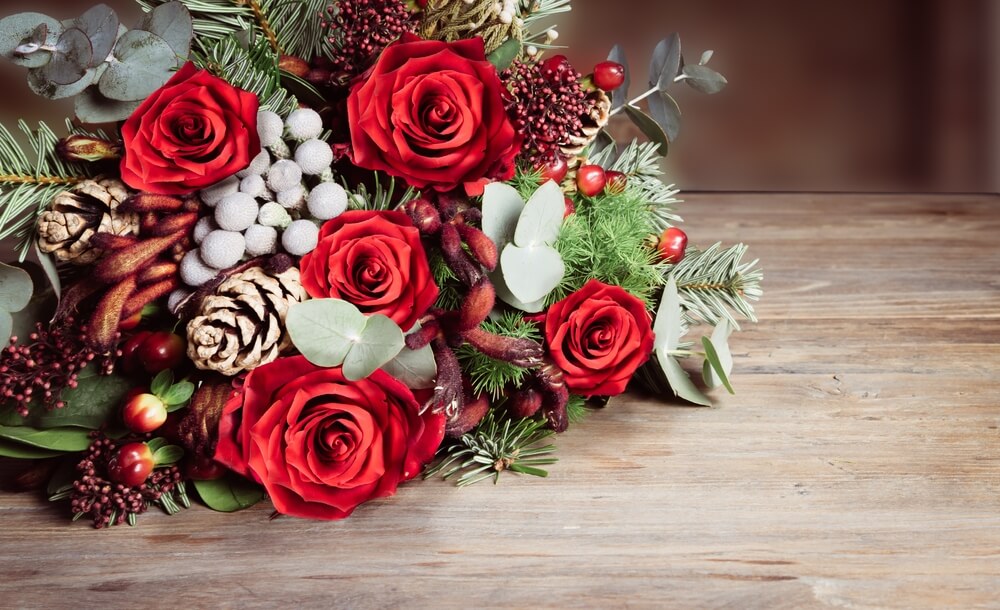
For florist shops, December can be one of the busiest and most emotional periods of the year. It is not only a month of concentrated sales, but also of connection, feeling and creativity — qualities at the heart of floristry. From small symbolic gestures to carefully assembled gifts, flowers, plants and Christmas arrangements can carry messages of joy. But what do customers buy, when and why? And how can florist shops prepare for each part of the season?
Why do some florists thrive in December while others merely break even? Winter has potential when the offer is positioned well
Beyond personal stories from the industry, historic international reports indicate that November and December can be important purchasing months for flowers, plants and festive decorations. Results depend heavily on positioning, product mix and sales channels. In the United States, Christmas and Hanukkah have been described together as a major floriculture purchasing period. Figures compiled by the Society of American Florists and reported for 2023 suggested that about 30% of adults bought flowers or plants during the winter holiday season, with floriculture spending associated with the two holidays estimated at about US$2.28 billion. These are US estimates for a past period, not a forecast for every local market. Winter holiday sales report
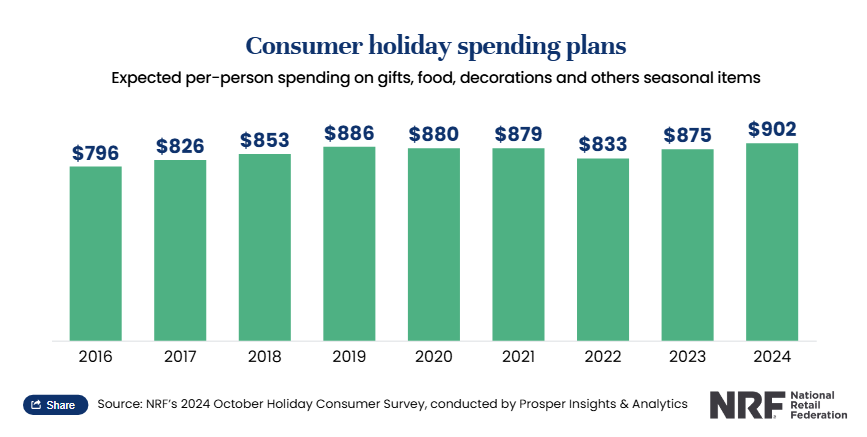
Broader US holiday budgets were also reported as high: the National Retail Federation expected average spending of about US$902 per person on gifts, food, decorations and other seasonal items in 2024. The source article cited a similar stated intention for 2025. These figures cover far more than flowers, but they illustrate the wider context in which gift baskets, seasonal plants, arrangements and premium delivery services compete. US holiday spending statistics
For the United Kingdom, an article citing the HTA Garden Retail Monitor reported that 13% of annual garden-centre houseplant sales in 2023 took place in December. This historic sector figure suggests an opportunity for gift-wrapped premium plants, small office trees and arrangements with a water source, alongside traditional bouquets. It should not be treated as a guarantee for an individual shop. FloralDaily source article
Channels do not perform uniformly. The source article referred to an online increase of 6.1%, but did not define a sufficiently clear market, period or dataset for that figure, so it should not guide planning on its own. The practical point is to test the mix of local presence, social media and digital sales, then calibrate distribution, price and visual presentation using current shop data.
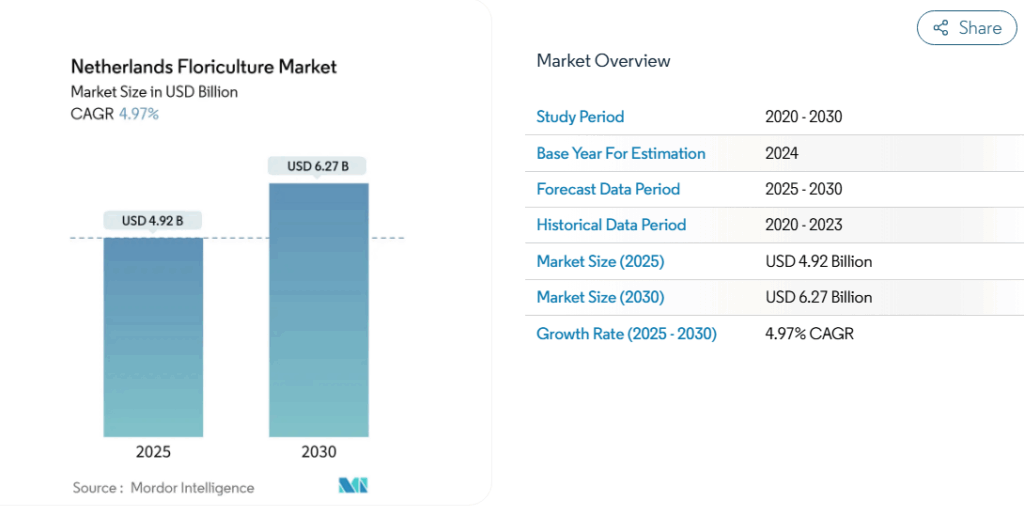
The Netherlands remains an important floriculture trading and logistics centre. The source article cited a 2025 market estimate of roughly US$4.9 billion, supported by advanced glasshouses, digital auctions and logistics. Because market definitions and estimates vary, use a current primary report before relying on that number. The broader operational lesson is that strong infrastructure can support winter availability and variety.
In short: December may offer meaningful demand, but results are more likely when the season is presented coherently: small floral trees with a water source, fir-based arrangements and carefully selected gift accents; personalisation through messages and packaging; a photogenic shop experience from window display to unboxing; and several appropriate channels, such as local retail, online and corporate sales. Return on investment is never automatically predictable, so set stock and campaign budgets against measured demand.
30 November: the start of the Romanian festive season, with locally specific demand
In Romania, 30 November is Saint Andrew’s Day and an important name day. The original article described it as the start of the festive season and suggested that online traffic could be lower because it is a public holiday. That pattern should be verified against current analytics.
For florist shops in shopping centres or other high-footfall areas, ready-to-carry bouquets, small arrangements and pre-wrapped gifts may support direct sales.
👉 ProFlorist tip: prepare themed displays and clearly priced ready-made bundles that customers can understand quickly.
6 December: name-day gifts and small seasonal surprises
In countries and communities that observe Saint Nicholas traditions, 6 December can create demand for small floral gifts.
Possible products include small bouquets with personalised wrapping, symbolic flowers such as roses, tulips or freesias, and gift boxes combining flowers with sweets or candles. Check local customs before planning stock.
👉 ProFlorist tip: create a compact themed collection of elegant, easy-to-give products for partners, colleagues or friends.
Christmas — the peak of the flower, decoration and gifting season
Christmas can bring a natural sales peak for florist shops. Customers may buy flowers and arrangements for visits to family, friends or business contacts, while festive arrangements become prominent seasonal products.
Common product ideas include:
- Seasonal bouquets — combinations of amaryllis, ilex, red roses, fir, cinnamon, pine cones and gold accents.
- Christmas arrangements — made with natural fir, baubles, ribbons, dried orange, cones, candles or gingerbread decorations.
- Handmade miniature Christmas trees, built by florists on a foam cone, branch by branch. A typical shop might offer designs around 30–40 cm tall for desks, with a water source and a reusable decorative pot; describe the actual product specification rather than treating those dimensions as universal.
👉 ProFlorist tip: explain online how your floral trees are made and what materials they contain. Avoid calling a product sustainable without evidence covering its materials, production, use and disposal.
How florist shops can increase December sales
- Personalise products — customers often value gifts that feel specific to the recipient.
Messages, handmade tags, initialled ribbons and bouquets based on stated preferences can turn an ordinary order into a more memorable gift. - Create a memorable shop experience — design the space as a coherent story.
From the window to the wrapping area, create a consistent atmosphere that begins outside and continues through the shop.
Customers may value not only the flowers but also the experience. Keep it warm, welcoming and visually distinctive, with consent-aware opportunities for social sharing. - Maintain an active online presence — even on quieter direct-sales days, consistent communication can matter.
Behind-the-scenes videos, stories showing the arrangement process and short films of floral trees being built can help customers understand the craft.
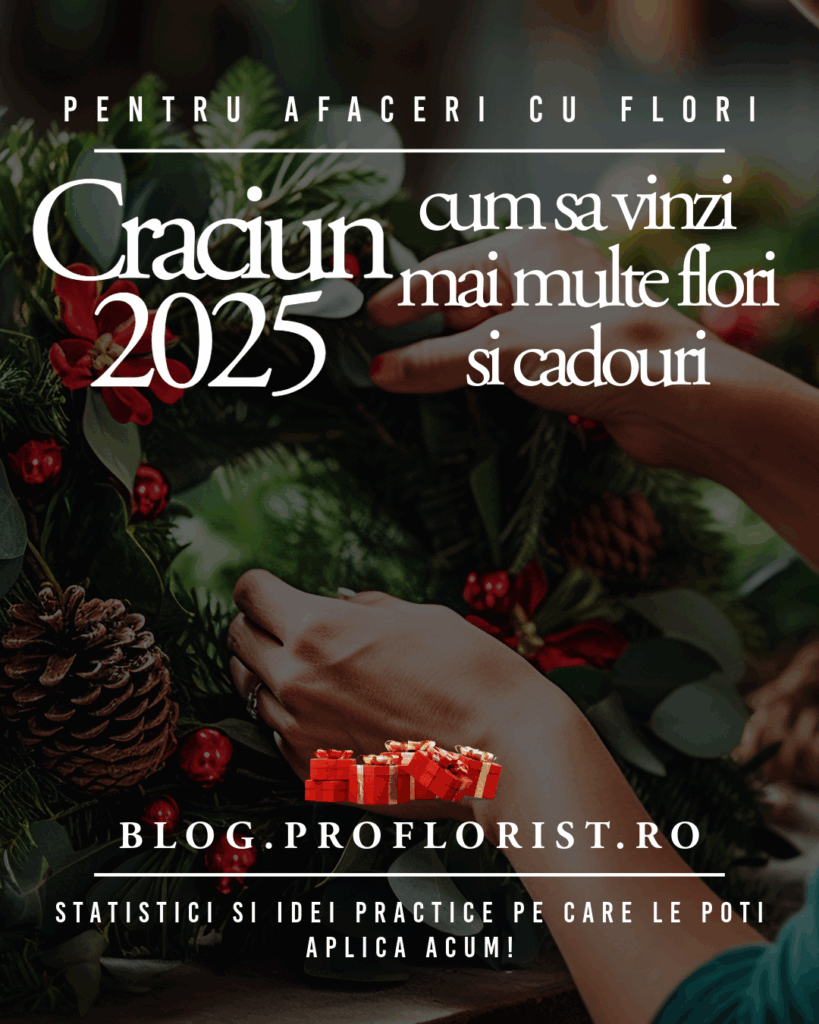
December is a time when florists can demonstrate both commercial skill and emotional sensitivity. Every bouquet, miniature tree or Christmas arrangement tells a story. When that story is supported by good products, clear information and reliable service, customers have reasons to return and recommend the shop.
Related articles
More ideas from the same area

Business & Management / Florists & Stories
How to calculate the real margin on a flower bouquet
A practical method for calculating contribution margin from net revenue and the variable costs…
Business & Management / Florists & Stories
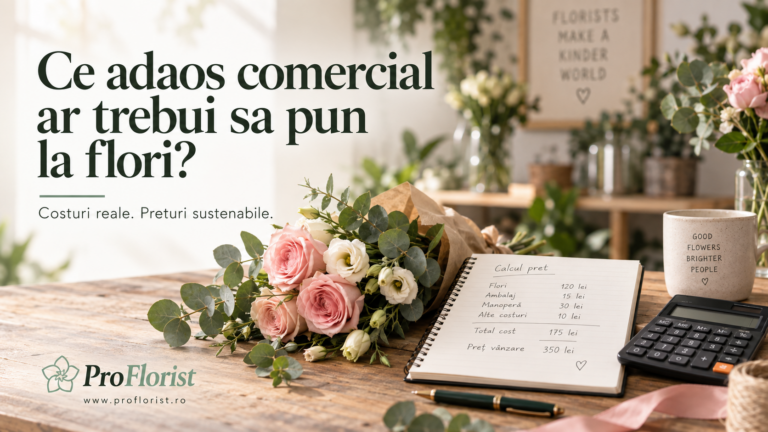
What commercial markup should I apply to flowers?
There is no universal commercial markup that is "correct" for all florists. A multiplier…

Business & Management / Florists & Stories / Supply & Flower Industry
Dignity, professional standards and the future of Romanian floristry: a conversation with the AADF
This article opens a three-part series on Romania’s floristry industry. Drawing on an in-depth…