From journalism to flowers that tell stories — Amalia Ispas, floral designer
Amalia Ispas and her path to an urban signature in floral design When you listen to Amalia Ispas, you get the feeling that the story writes itself. Born by the sea, in Constanța, and originally trained in Journalism - University of Bucharest, Amalia commuted between "what she needs" and "what she loves" until flowers won [...]
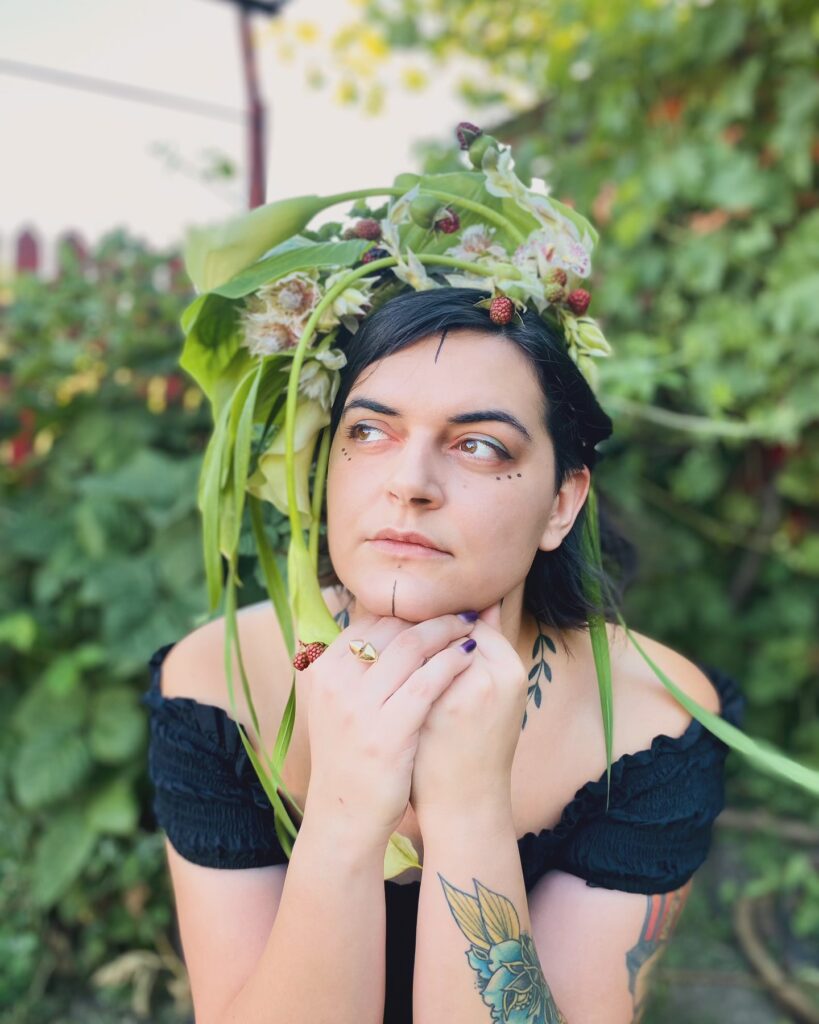
Amalia Ispas and her path to an urban signature in floral design
When you listen to Amalia Ispas, you get the feeling that the story is writing itself. Born by the sea, in Constance, and originally formed at Journalism – University of Bucharest, Amalia shuttled between “must” and “love” until flowers finally won. Today she is one of the new, authentic and brave voices of contemporary floral design in Romania – a name that speaks openly about education, balance and embracing her own artistic identity.
Her route was not linear, but it was coherent: from art and poetry, to communication, then to floristry. A story of courage, vulnerability and forging one’s own path in an ever-changing industry.
The art of telling stories with flowers
Journalist training and artistic beginnings
“I really started in journalism, but with the soul of an artist”, says Amalia. “Ever since I was a child, I was very interested in art — I wrote poems, drew, made installations for any occasion. From training as a journalist, I kept the way I build a visual story: I always think about the message, the symbolism, the emotion I want to convey. Instead of words, today I use plant materials, and that helps me reach people faster.”
This narrative approach is present in everything she creates. For Amalia, a floral design is not a simple decorative composition, but a form of storytelling – a silent conversation between the artist, nature and the viewer.
Madame Ambrosia – beginnings and rediscovery
The flower shop as an exercise in identity and a learning laboratory
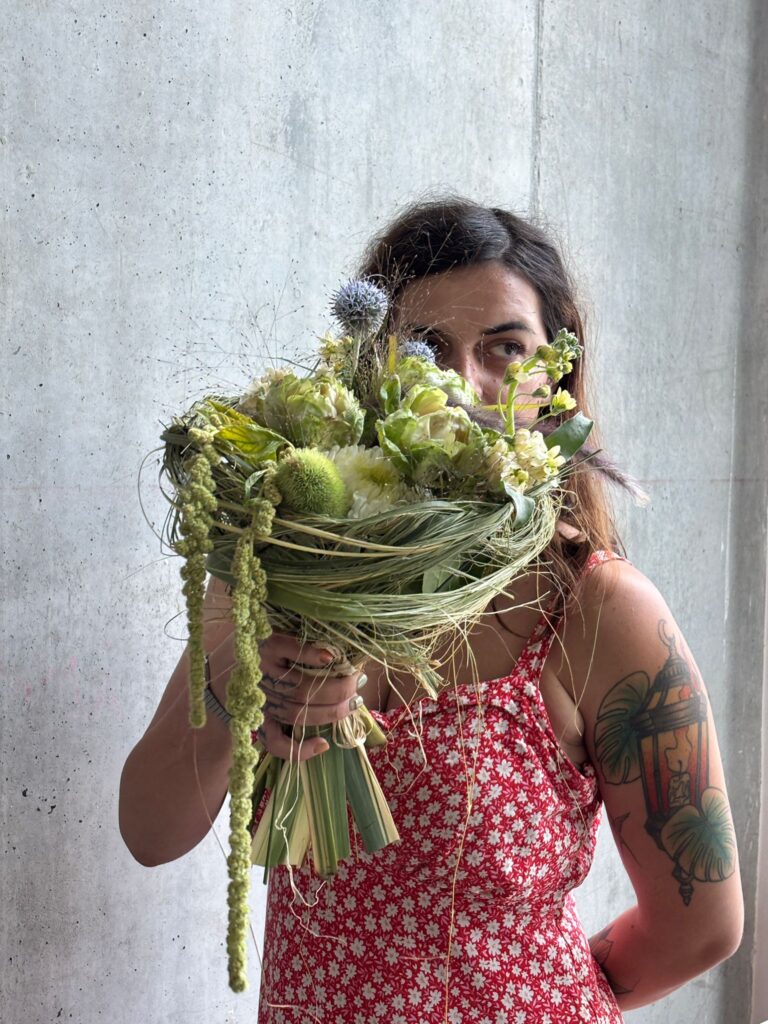
The project Madame Ambrosia – Urban Flower Shop it was, for Amalia, a necessary stage.
“I opened the flower shop at a time when I wasn’t completely ready, but if I hadn’t, I wouldn’t have gotten here. I realize now that it took that misstep to learn where I wanted to be.”
Today, the flower shop has evolved into a project-based concept, replaced by creative interior design projects and art installations. For Amalia, “urban” doesn’t just mean a city, but a state of mind:
“Urban is about rhythm, chaos, improvisation, but also about the need for authentic beauty in the midst of it all. It means breaking patterns, combining concrete with green, raw with fragile.”
Madame Ambrosia was her first creative laboratory. Today, the main project is herself: Amalia Ispas – florist, an emerging artist working in conceptual design and floral art with a message.
“Soul of the Forest” – when the flowers become manifest
A creation with an ecological and emotional message
Amalia’s participation in Floral it was a turning point.
The theme of the competition – creating a fairy tale character – became for her an opportunity to talk about a painful reality: the destruction of nature.
“I chose to embody the Amazon Forest, the lungs of the Earth. I worked for three hours alone, with a borrowed parrot, painted toys, horns and wings, all improvised. It was crazy, but also a revelation.”
“Soul of the Forest” was an installation work about the fragility of life and the human powerlessness in the face of nature. It was also the lesson that showed her that she could build emotion and meaning even without perfect resources.
“That was when I understood how much I could do. I made friends, gained confidence and discovered how important it is to have the courage to express yourself.”
Floral education – between basic and refinement
The road from learning to experiment
For Amalia, education is the foundation of any serious florist. “It depends on where you are when you decide to invest in yourself. A solid foundation opens up horizons.”
She graduated from Filomena Flower School, a long-term, module-based course, while working at Anthurium and attended workshops held by Romanian and international florists.
“This combination worked: I was learning, practicing, making mistakes, correcting. I think an international certification only makes sense after hundreds of hours of practice, when you can understand the fine detail explained by the great masters.”
Education, in her view, does not mean collecting diplomas, but the formation of a critical eye and a discipline.
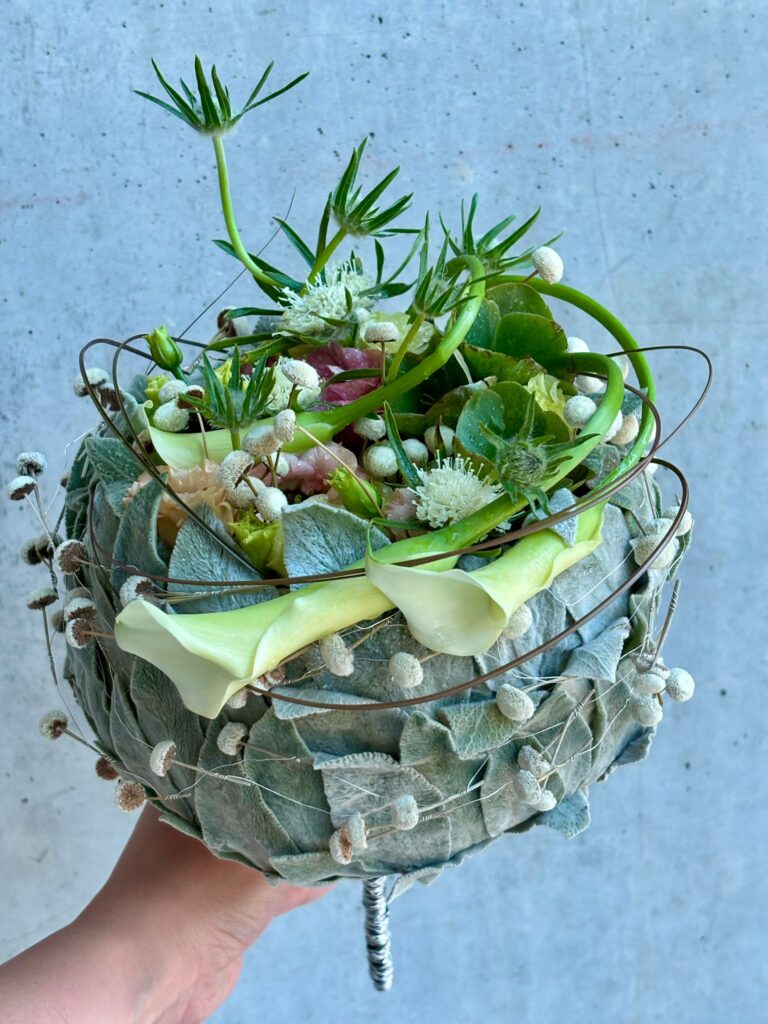
The balance between creation and life
How does a florist who is also a mother stay creative
“My family is my support. My husband, my parents, my little girl Maya – they are my balance system.”
For Amalia, motherhood is not an obstacle, but a source of energy.
“Balance does not mean perfection. Sometimes it’s chaos, but from it the most authentic things are born. Inspiration also comes from the child, from the routine, from the little things.”
Creativity, she says, is trained. “When I see a new material, a texture, a shape, my mind automatically starts building. I jot down ideas, sketch them, and later turn them into works.”
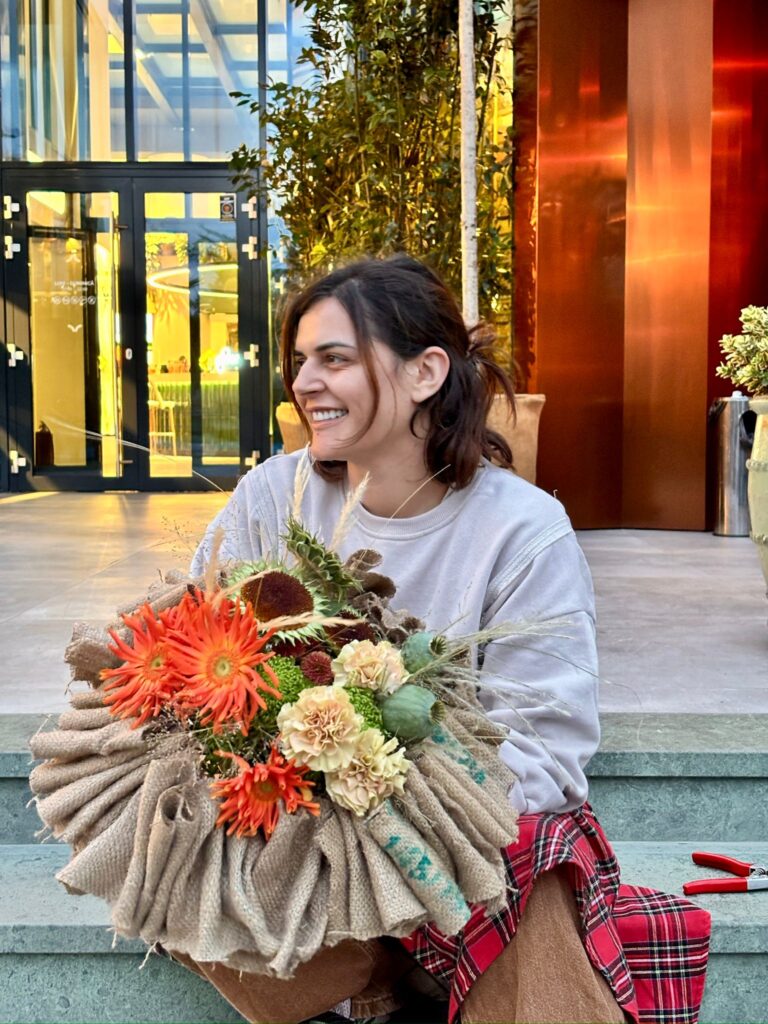
“One woman show” – discipline and limits
How to build a career step by step
“I opened the flower shop thinking I would be a one-woman show. But I quickly understood that big projects require a team.”
Currently, Amalia works alone on her projects, preferring quality over volume.
“For now I’m focusing on education and artistic projects that I can take on by myself. I like my pace and the freedom to create without pressure.”
This stage of autonomy is, for her, a form of personal construction.
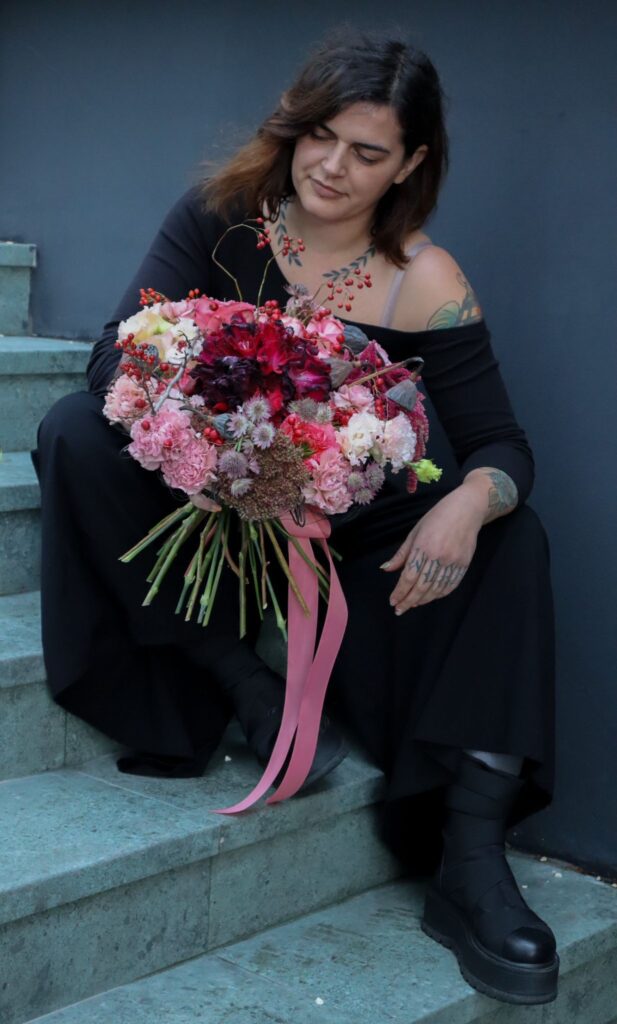
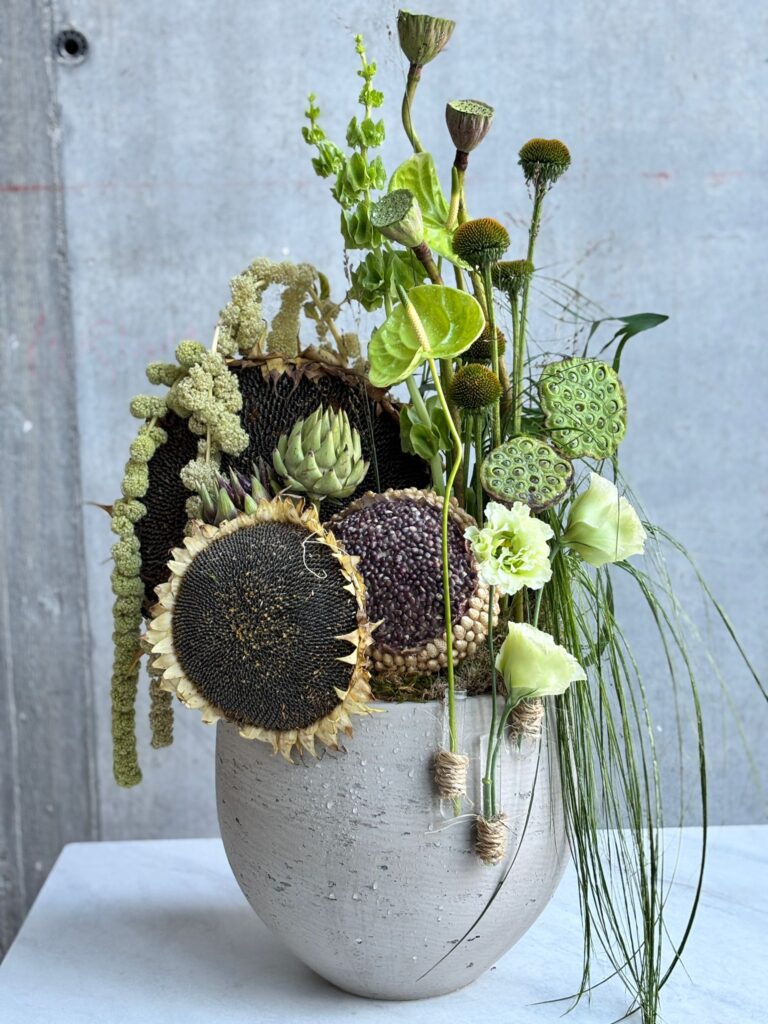
Signature Amalia Ispas
The art of telling the truth through flowers
“I’m still discovering. I don’t have a fully formed style, but I’m moving towards conceptual design. I’m not just interested in how beautiful something is, but what emotion it creates.”
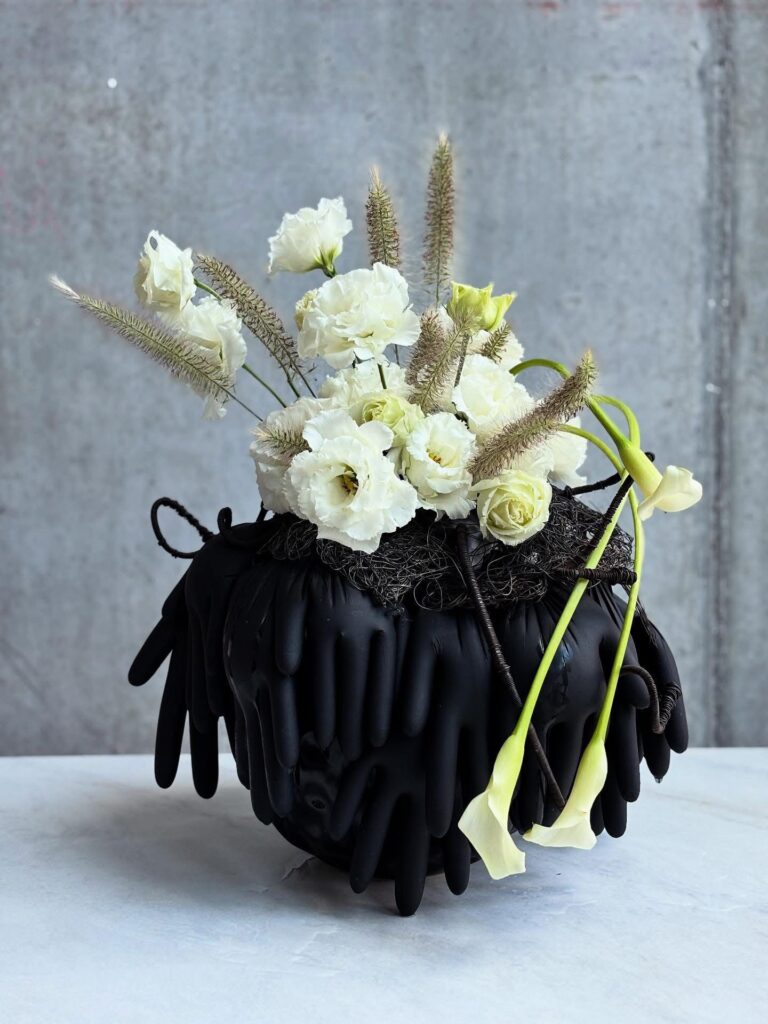
Amalia works with contrasts: organic and geometric, raw and delicate, intense and minimalist.
“I like unusual materials: metal, recycled plastic, paper, clay. I sometimes use controversial elements – bird skulls, gas masks – because they provoke discussion. I do not want to create merely decorative floral art. I want it to be felt and to be discussed.”
In a world of “pretty arrangements”, she prefers the brutal honesty of a true message.
Contests or business investments
How a florist prioritises between art and business
“It depends on what you want to build. If you want a business, invest in the workshop and marketing. If you want artistic performance, invest in competitions.”
For Amalia, competitions are not about trophies, but about pushing the limits:
“In a few days at a competition you gain as much as in months of daily practice. The ideal is balance: you need a base to make a living from the craft, and competitions are the investment in the next level.”
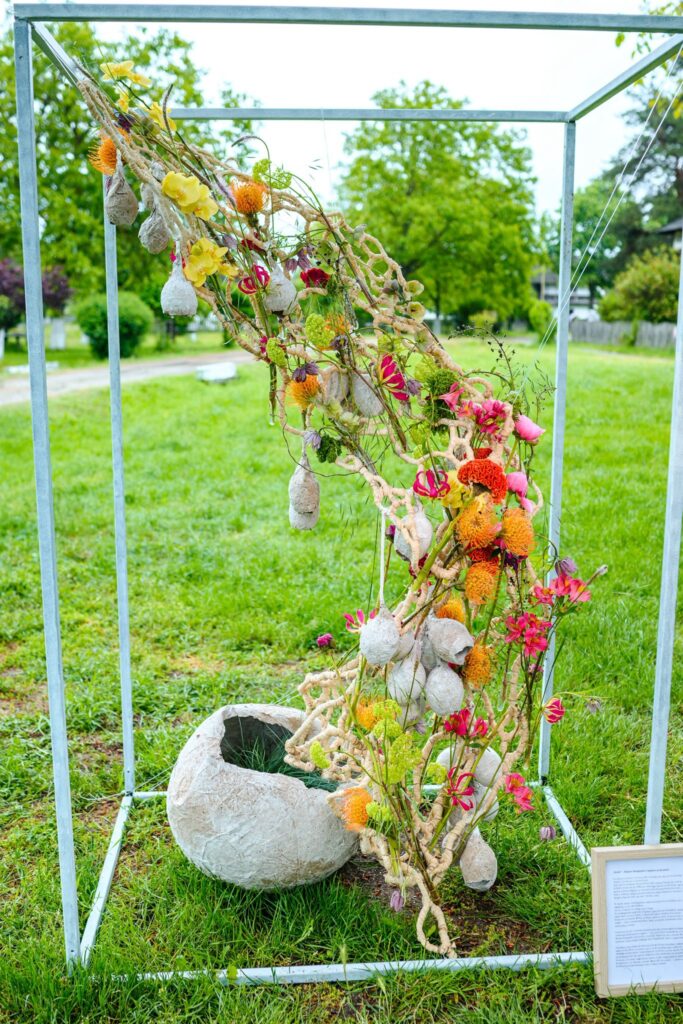
Romanian flowers and imported flowers
About balance, not rivalry
“It’s not a struggle, it’s a choice. When there is a good local alternative, I choose Romanian: hyacinths, chrysanthemums, for example, are excellent. But imports remain vital for constancy, quality and variety.”
For Amalia, the future of the flower market is not in extremes, but in balance. “Each has its role. Local provides authenticity, import provides diversity. The important thing is to maintain standards.”
Wishlist for the floral industry in Romania
Education, respect, collaboration
“On education, we need to start with ourselves. On raising standards and taking our job seriously. On pricing – explaining to customers what they are paying, why and how much our work is worth.
Respect for the profession begins between us, the florists. More support, less comparison.
In collaboration – the potential is huge. Big projects are done as a team, not in competition. If we do even half of these things, three years from now we’ll have a different industry.”
Aesthetics vs. brand
Visual identity and customer experience
“The aesthetic signature is the foundation. That can’t be copied. But without a coherent brand experience — how you communicate, package, deliver — you’re not really reaching people. They go hand in hand.”
For Amalia, real differentiation is not a decision, but an ongoing process between creativity, coherence and authenticity.
Education as an investment
How to measure the success of a young workshop
“A workshop invests a lot in education. We participate in courses, workshops, demonstrations. The ROI is seen in the quality of projects, in customer feedback and in new opportunities that arise due to reputation.”
For Amalia, success is not only measured in money, but in recognition, visibility and the ability to build a distinct voice in the industry.
A voice that changes perception
Flowers as a form of artistic language
Amalia Ispas does not want to make “proper” floral art. She wants her work to provoke feeling and thought. In an industry where beauty is often commercial, she chooses aesthetic truth.
“Flowers are a form of language. I just help them tell stories.”
In an increasingly competitive floral world, Amalia Ispas represents the generation that is changing the perception of the florist profession.
She does not simply arrange flowers, it builds meaning, signature and direction.
And her story is an exhortation for all those who have the courage to follow their calling, even when the path seems atypical.
If you want to discover more of Amalia Ispas’ universe — the inspiration behind her designs, career path and vision of floral education — follow her on social media:
👉 LinkedIn – Amalia Ispas
👉 Facebook – Amalia Cojanu Ispas
What do you think?
How do you see the future of floral design in Romania? Does personal style or continuing education matter more?
Related articles
More ideas from the same area
Business & Management / Florists & Stories
How to calculate the real margin on a flower bouquet
A practical method for calculating contribution margin from net revenue and the variable costs…
Business & Management / Florists & Stories
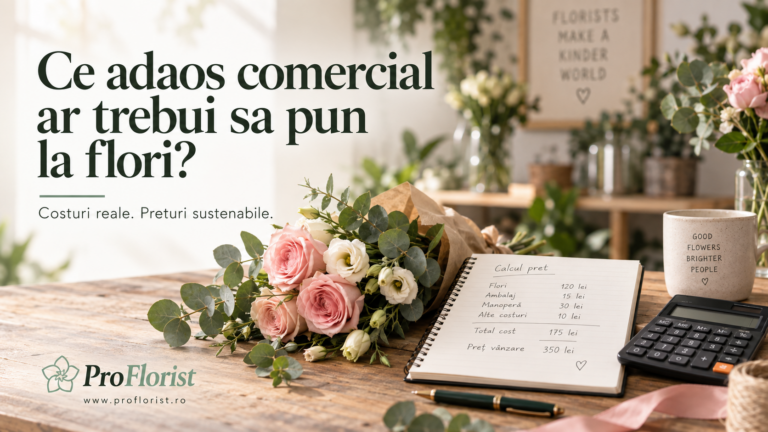
What commercial markup should I apply to flowers?
There is no universal commercial markup that is "correct" for all florists. A multiplier…
Florists & Stories / Supply & Flower Industry
Ten lessons from ProFlorist’s “Coffee with Florists” invitation
Archive note: the source invitation contains conflicting year references, including 2026 and 2027. This…