Why lighting matters when displaying flowers in a florist shop
Thoughtful lighting can reveal the colours, shapes and textures of flowers and help define a shop’s atmosphere. This guide considers practical design choices without promising universal effects on sales.
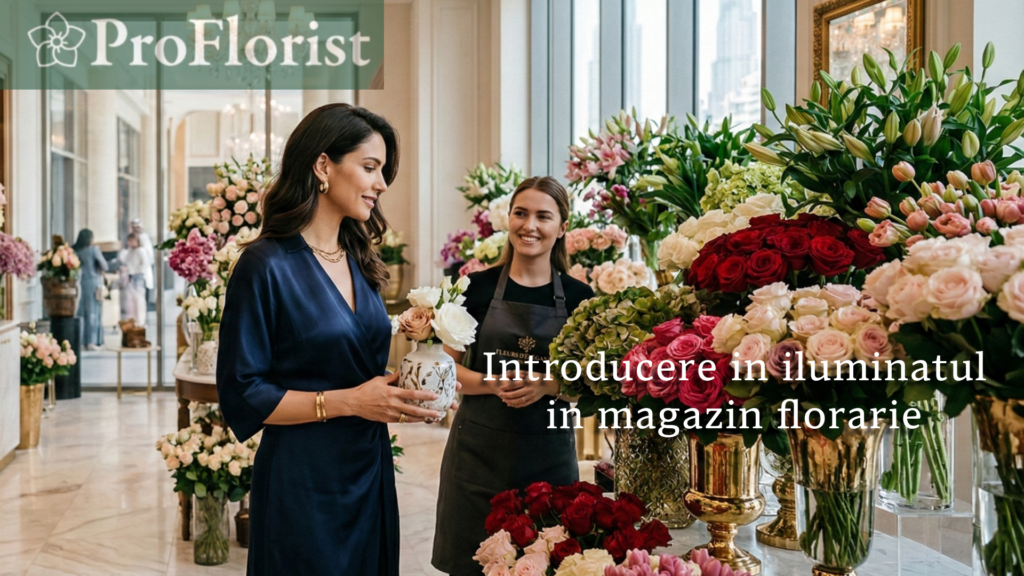
Introduction: using lighting to shape a flower display
Lighting in a florist shop is more than a technical detail. It makes products visible, supports orientation and can affect how visitors perceive colours, materials and areas of the shop. Retail research also explores associations between lighting, mood, time spent in a shop and purchasing behaviour. These effects vary with the audience, stock, space, time of day and many other factors, so lighting alone cannot guarantee higher sales.
Atmosphere is especially relevant to flowers because many purchases are connected with emotion and personal occasions. Light, natural fragrance and music can combine to form a coherent setting. Marketing literature often calls the deliberate design of these sensory cues “sensory marketing” or a “servicescape”. The aim should not be to maximise stimulation, but to create a suitable, comfortable and accessible environment.
How lighting may be perceived in retail
Light affects visibility and orientation, and may therefore contribute to the emotional impression of a space. Clear, balanced lighting can suggest openness, while areas that are too dark can make selection difficult. Common design starting points include:
- bright, clear light helps visitors take in the range quickly
- warm, diffused light can support a calmer atmosphere
- lighting contrast can direct attention towards selected products
Accent lighting can guide the eye towards important products or display areas. In floristry, the same arrangement may look very different depending on colour rendering, shadows and viewing direction. Test changes in real conditions before making them permanent rather than assuming a particular customer response.
The complete atmosphere: light, fragrance and music
A shop’s atmosphere rarely depends on a single cue. Music, for example, may contribute to the perceived pace and character of a visit:
- slower music can support a relaxed setting
- faster music can create a more energetic impression
Fragrance can be noticed immediately. Some studies examine relaxing associations with scents such as vanilla or lavender, but responses are individual and added fragrance can be uncomfortable for sensitive visitors. A florist shop already has natural floral scents. Any additional scent should therefore be used sparingly and transparently, with allergies in mind.
Together, light, sound and fragrance form the retail atmosphere. A coherent experience can support a display, but does not replace product quality or good advice and is not invariably more important than the product itself.
Premium or value-led positioning: lighting as part of the visual identity
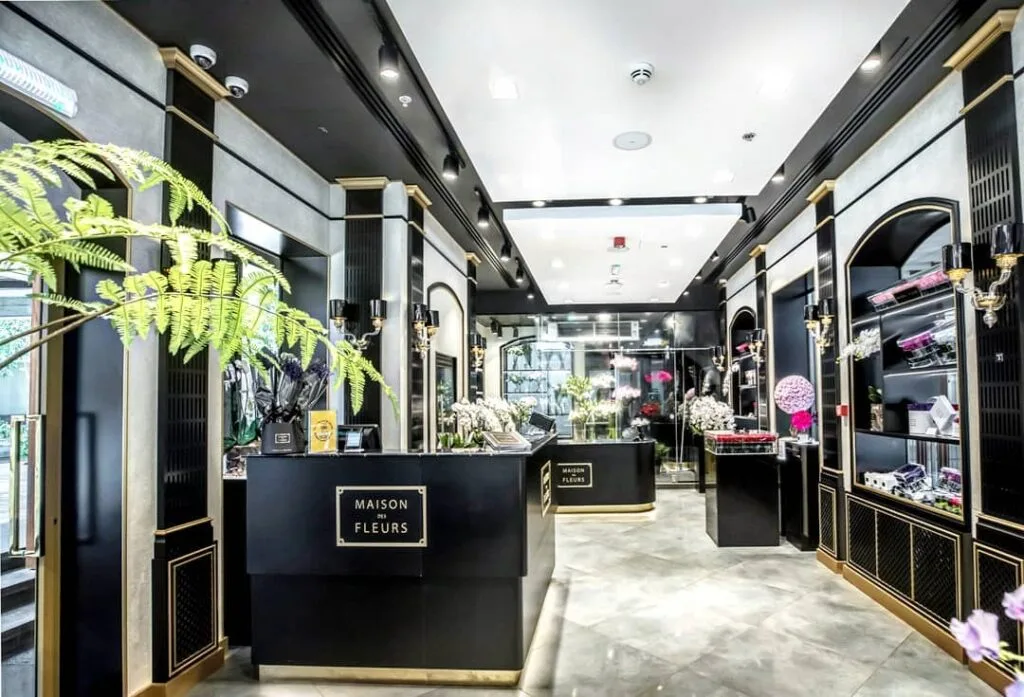
Premium florist shop
A premium presentation often uses warm, directional lighting arranged in layers:
- spotlights to emphasise selected bouquets
- soft ambient light for general illumination
- controlled contrasts to organise the space
This can make colours appear richer and textures more distinct, while giving the room a calm, carefully curated character. Whether customers infer greater value or pay more cannot, however, be attributed to lighting alone.
Value-led florist shop
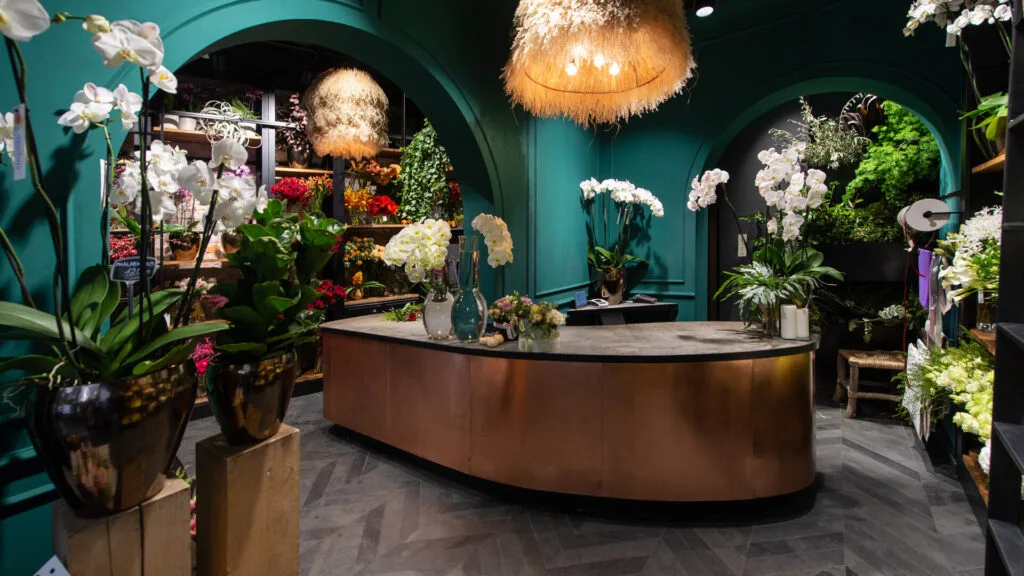
A shop designed for clarity and accessibility might use:
- even, neutral or relatively cool light
- powerful LED fittings for good visibility
- fewer contrasts and broad illumination
The result may look more practical and straightforward. This does not mean customers will necessarily leave quickly or fail to form an attachment; price, service, range and personal advice all remain important.
One example frequently cited in this context comes from a case account about lighting in premium retail:
Appropriate lighting can make products stand out and may support willingness to buy.
The account concerns Kleinfeld Bridal in New York. After a redesign involving more accent lighting and a different colour temperature, the article reported changes in product perception and observed customer behaviour. As this is a single commercially presented case study, it does not establish a universal causal effect.
- visitors reportedly spent longer in the shop
- they interacted more with the products
- greater willingness to purchase was reported
Lighting and freshness: an often overlooked connection
Lighting affects not only perception but, through heat and intensity, the conditions experienced by cut flowers and plants. Strong heat sources can accelerate dehydration and wilting. Modern LED systems are often selected because they:
- usually produce less heat at the illuminated object than halogen lamps
- can render natural colours well when an appropriate specification is chosen
- are available in a wide range of intensities and spectra
For living plants, fittings with plant-appropriate spectra can support photosynthesis indoors. The required intensity, duration and distance depend on the species. Such systems are not a universal replacement for daylight and should be specified using sound horticultural guidance.
Lighting in a florist shop is therefore not only about seeing better; it is also about creating an appropriate visual experience.
It can help distinguish a basic sales area from a place where people want to look more closely.
That matters in floristry because flowers often accompany emotions and personal occasions.
The source article refers to an academic study by Lin and Yoon from 2015. Without full bibliographic details, it should not be treated as general proof. The study is said to have considered possible relationships including:
- stronger lighting contrasts may increase attention to particular products
- colour temperature may be associated with emotions and purchase intentions
For a florist shop, this suggests a testable design hypothesis:
a correctly aimed spotlight can make a bouquet easier to notice. Whether visitors then value it more or buy it more often should be assessed through observations in the individual shop.
Essential aspects of florist-shop lighting
- Colour temperature: Choose warm or neutral light that renders the shades of flowers as faithfully as possible.
- Light intensity: Excessive light and heat may affect sensitive stock, while insufficient light makes it difficult to appreciate.
- Direction and distribution: General light and accents should aid orientation without producing harsh, distracting shadows or glare.
Types of lighting for florist shops
Several forms of lighting are available to florist shops, each with different characteristics:
LED lighting
LED systems are popular because of their energy efficiency, lifespan and range of colour temperatures. Products with good colour rendering can emphasise natural floral shades. Heat, distance, lighting duration and the product specification still require careful assessment.
Halogen lighting
Halogen offers warm, intense light that can reveal fine petal details. It also creates comparatively more heat and uses more energy, making distance and duration especially important around sensitive flowers.
Ambient and focused lighting
Combining ambient and focused lighting provides legible general illumination with accents for special arrangements. Dimming and adjustable fittings make it easier to respond to daylight, seasons and changing displays.
Lighting the florist’s window
A shop window is often a potential customer’s first visual contact with the business. Careful lighting can make the displayed range easier to see. Adjustable spotlights allow the direction of light to respond to changing arrangements, daylight and the season.
Tips for shop-window lighting
- A range of roughly 3000 to 4000 kelvin can provide a balance between warm and neutral light, depending on the materials and intended effect.
- Check reflections, glare and strong shadows from the viewpoint of people passing the window.
- Use dimmable or adjustable fittings to shape the atmosphere and emphasise particular flowers.
An industry article summarises the intended role of retail lighting along these lines:
Lighting shapes perception, mood and movement and may support commercial presentation.
In practical terms:
- light does more than make a product visible
- it may also influence:
- which areas attract attention first
- how easily visitors find their way around
- how clear and trustworthy the presentation appears
Lighting is not merely decoration.
It is part of display and operational planning.
Between the impressions:
- “the flowers are beautiful”
and - “I want to look more closely at that arrangement”
lighting can make an important difference, alongside quality, spatial design and customer service.
Related articles
More ideas from the same area

Business & Management / Events & Community / Florists & Stories / Marketing & Sales / Supply & Flower Industry
ProFlorist’s Bucharest florist meeting on 3 July 2026: event archive
Archive note: this meeting took place in Bucharest on 3 July 2026. The article…
How storytelling can support the sale of floral arrangements
Storytelling can help explain the inspiration, materials and intended occasion behind a floral arrangement.…

Business & Management / Marketing & Sales / Supply & Flower Industry
Professional photos for florists, without a studio and without editing
Professional-looking product photographs can help florists present their work consistently. AI-assisted applications may reduce…