Why younger generations are turning away from imported flowers: the “local & sustainable” trend changing floristry
Gen Z and millennials are profoundly changing how we think about flowers for weddings and events. More young people are avoiding imported flowers and choosing locally grown blooms, home-grown bouquets, wildflowers or even potted plants — a shift already being felt across the global industry. […]
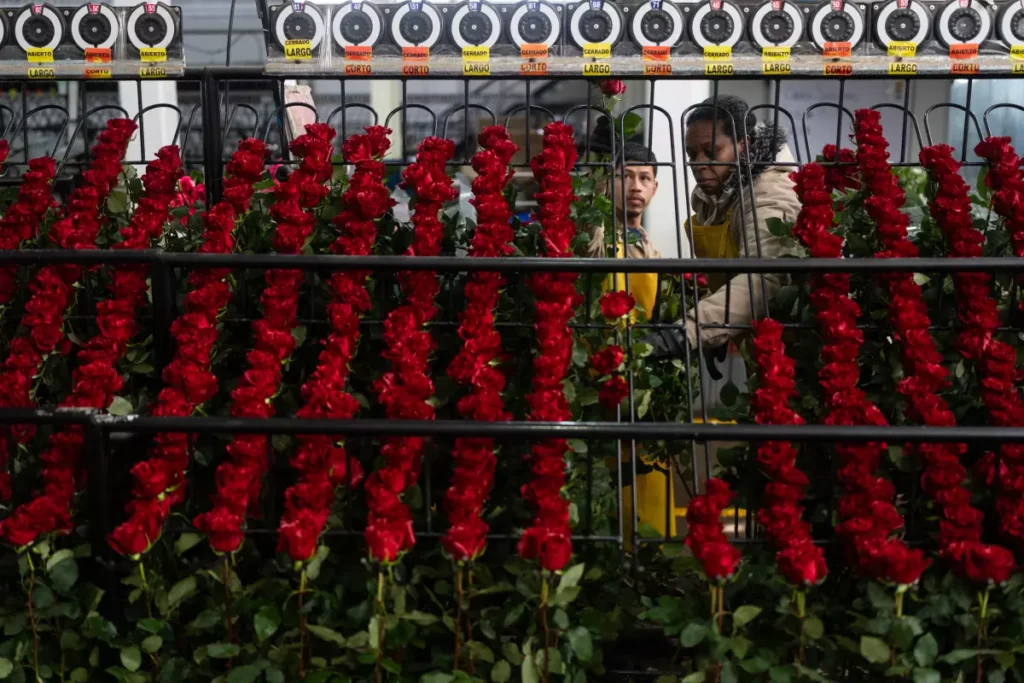
Gen Z and millennials are profoundly changing how we think about flowers for weddings and events. More young people are avoiding imported flowers and choosing local flowers, home-grown bouquets, wildflowers or even potted plants — a shift already being felt across the global industry.
Why? Growing awareness of the climate impact of imported flowers and a desire to create authentic, personal and sustainable events.
The Emily Day case: an entire wedding with flowers grown in her own garden
In Canada, Emily Day chose to do something completely different for her wedding:
instead of hiring a florist, she grew the flowers herself in her garden. Her bouquets not only looked spectacular, but cost just CAD 925 — a fraction of typical wedding flower costs.
“It made me understand how many resources imported flowers consume — from the plastic they are wrapped in to the aircraft that transport them,” Emily says.
Drying the flowers in advance made them extremely durable. Some guests kept them, while a friend reused them at her own ceremony.
Imported flowers and their carbon footprint
Most fresh flowers imported into North America and Europe pass through an intensive logistics chain:
- they are picked in South America or Africa
- chilled immediately
- transported by air
- stored again in distribution centres
Professor Kai Chan, a sustainability specialist at the University of British Columbia, explains:
“Flowers spoil quickly, so they are kept cold and transported by air — two processes with a major climate impact.”
In addition, monoculture — vast crops of roses or carnations — can mean:
- deforestation
- depleted soil
- greater vulnerability to pests
The result is a growing contrast between “perfect” imported flowers and local flowers that may be less uniform but are authentic and have a story.
“Buy local”: a movement gaining ground
More floral businesses are adopting a sustainable floristry model:
- local, seasonal flowers
- avoiding highly polluting floral foam
- collecting and composting flowers after events
- reusing bouquets
- working directly with local growers
Floral designer Holly Lukasiewicz says:
“When I started, I set out to recycle everything I could, compost what I could and use local flowers whenever possible.”
This approach is increasingly visible among artisan florists, wedding designers and small flower farms in several markets.
Why do customers still choose imported flowers?
Imported flowers remain dominant in many markets for three reasons:
- Lower prices
Roses or hydrangeas from the Netherlands or Kenya are often more affordable than local alternatives. - Demand for out-of-season flowers
Consumers want any flower at any time, which cannot be supplied locally throughout the year. - Uniformity and consistent quality
Large events require standardisation, and importers can supply large batches with the same characteristics.
Professor Neil Anderson of the University of Minnesota notes:
“Many customers say they want sustainability, but ultimately choose the cheapest option.”
Are artificial flowers a sustainable option?
In short: rarely.
Although marketed as environmentally friendly alternatives, most are made of plastic and are also imported.
Silvia Bellezza of Columbia Business School warns:
“We should not take sustainability claims at face value. Plastic does not become environmentally friendly simply because it is reused.”
What does this trend mean for florists?
This is an important moment for the floristry industry.
Conversations increasingly focus on:
- micro flower farms
- direct cooperation between florists and growers
- local flowers for smaller events
- seasonal floral design
- dried and preserved flowers
- reusing arrangements
Younger customers are better informed, more involved and more attentive to impact.
They are not abandoning floral aesthetics, but excess, waste and anonymity.For florists, this is not necessarily a threat but an opportunity:
👉 better customer education
👉 the opportunity to work with local materials
👉 support for local flower farms
👉 authentic, distinctive floral design rooted in the seasonThis is the point at which sustainability becomes not only a trend, but a competitive advantage.
Related articles
More ideas from the same area
Software & Digitalisation / Supply & Flower Industry
Floristry enters the AI era: from the greenhouse and supply chain to florist and customer
Artificial intelligence is beginning to influence the flower industry, from crop planning and distribution…
Florists & Stories / Flower Guides & Inspiration / Supply & Flower Industry
10 cut flowers that last a long time in a vase and how to extend their lifespan
Are you looking for flowers that last? Cut flowers can instantly transform a room,…
Why supermarkets distort customers’ perception of flower prices
A low-cost supermarket bunch is not directly comparable with a bespoke arrangement from a…