Business & Management / Supply & Flower Industry
From root to flower shop: understanding flower supply chains and quality differences
Behind every flower you see in a flower shop is a complex road, invisible to most customers. From the root to the florist: understanding the path of flower supply and the differences in quality means discovering how a flower producer, a breeder and an entire logistics network contribute to the final result. The quality of the flowers is not [...]
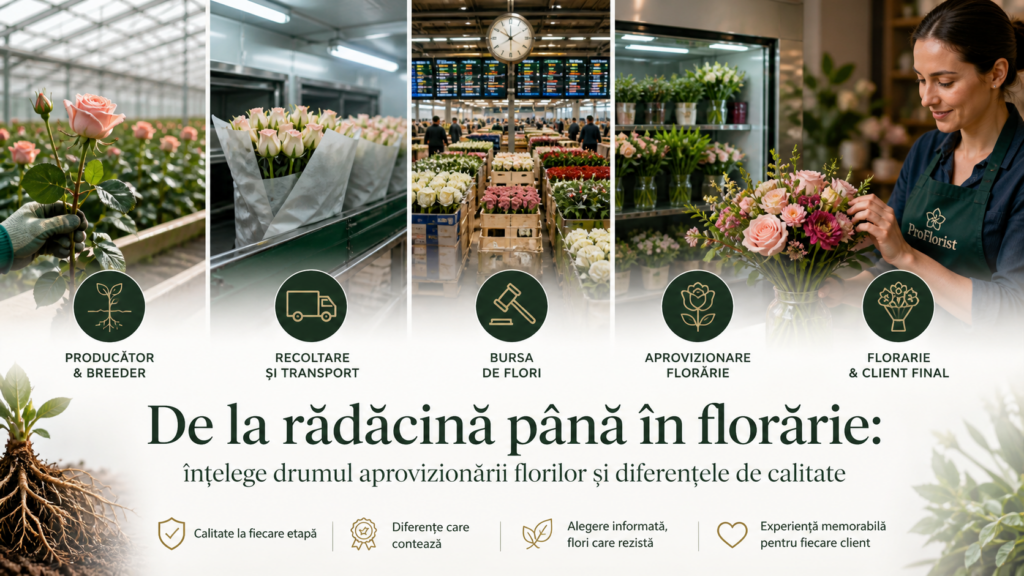
Behind every flower you see in a flower shop there is a complex road, invisible to most customers. From the root to the florist: understanding the path of flower supply and the differences in quality means discovering how a flower producer, a breeder and an entire logistics network contribute to the final result. Flower quality is not accidental – it is built into every step, from variety selection to how the flower reaches your hands.
Beyond the bouquet: the unseen story of flowers
Flowers are among the most emotional products we buy. We offer them for anniversaries, choose them for weddings or use them to transform a space into a memorable place. However, few know what happens before a bouquet ends up in a display case or in a perfect arrangement.
In reality, sourcing flowers is a sophisticated process that involves flower producers specialists, breeders who create new varieties, international exchanges where prices are set and an extremely well-developed logistics. Each link in this chain directly influences the differences in the quality of flowers reaching local flower shops.
For florists, but also for customers, understanding these differences becomes more and more important. Why do some flowers last a week and others only a few days? Why do some bouquets have intense colours and perfect shapes, while others look tired from day one? The answer lies not only in care, but in the entire path of the flower.
ProFlorist, through its experience working with florists and industry professionals, brings this perspective closer. The platform is not only a space for inspiration, but also an educational hub that helps to understand the mechanisms behind modern floristry. In a changing market, where supply chains and customer expectations continue to evolve, the difference between an ordinary flower and a premium one becomes an essential criterion for success.
In this article you will discover exactly how flowers travel around the world, how quality standards are set and what decisions make the difference between a mundane bouquet and a memorable one.
How it all begins: the role of the flower producer and breeder
Early in the morning, in a greenhouse in Holland or Ecuador, the first rays of light touch perfect rows of roses, tulips or peonies. There, in fact, the story of each flower begins. A flower grower is not just a grower, but a specialist who controls every detail: temperature, humidity, light, nutrition. Every factor directly influences the quality of the flowers, from the intensity of the colour to the durability in the vase.
Modern manufacturers use advanced technologies, sensors and automated systems to create ideal conditions. At the same time, the choice of variety is essential. This is where the role of the breeder comes in, a less visible but extremely important actor in the flower industry. Breeders are developing new varieties of flowers with spectacular shapes, unique colours and increased durability. Some of the most popular flowers in florists are the result of years of research and testing.
Differences in flower quality start right from this stage. A well-grown flower from a stable and tested variety will have a stronger structure, stronger petals and a longer life after cutting. In contrast, flowers from uncontrolled sources may look good at first glance, but they degrade quickly.
Greenhouse to Market: The Flower Supply Chain
After harvesting, a race against time begins. Flowers are extremely sensitive products, and every hour counts. The moment they are cut, they enter a complex logistics chain that includes rapid cooling, special packaging and controlled transport.
Flower sourcing requires perfect timing between producers, transporters and distributors. The flowers are kept at low temperatures, sometimes even from a few minutes after harvesting, to slow down the natural process of decay. The packaging is designed to protect the stems and buds, and the transport is done under carefully monitored conditions.
Many flowers travel thousands of kilometres before reaching a local flower shop. From greenhouses in the Netherlands, Kenya or Colombia to local florists, every step can influence the final quality. If the cold chain is broken or the handling is not correct, the differences in flower quality become immediately apparent.
The flower exchange: where quality and price are determined
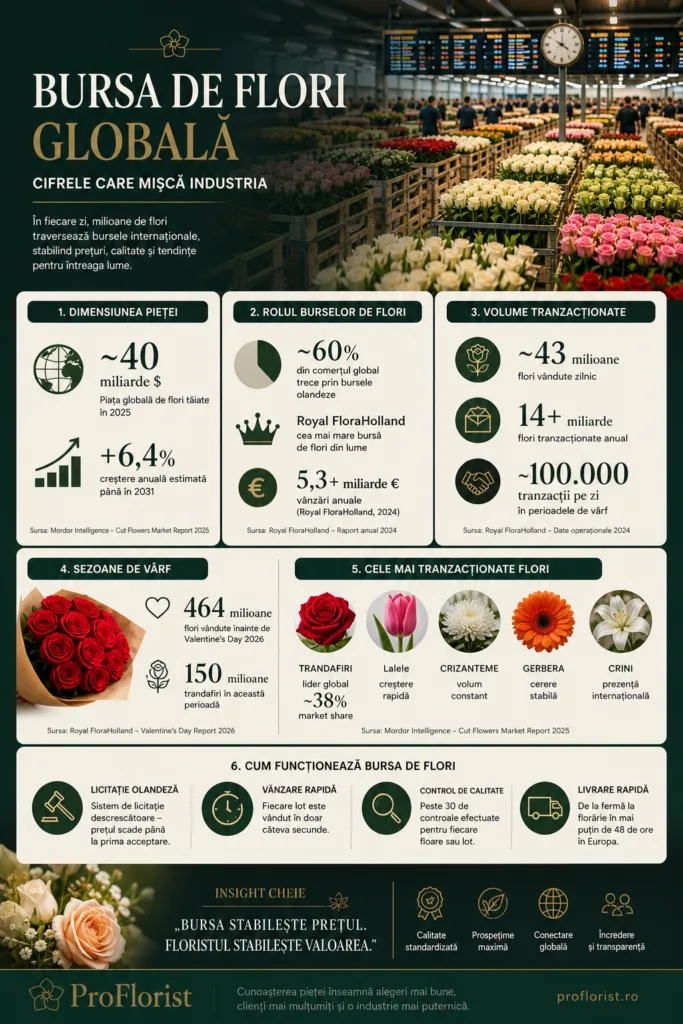
One of the most fascinating places in the industry is the famous flower exchangeRoyal FloraHolland. Here, millions of flowers are traded daily in a fast and highly competitive system. It is where supply and demand meet in real time.
The flower exchange operates on the basis of clear classification standards. Flowers are judged on size, maturity, uniformity and overall appearance. These criteria determine both the quality of flowers and their price. A premium flower will have a higher price, but also superior durability.
For florists, understanding how this market works is essential. Prices may vary from day to day depending on the season, events or weather conditions. During busy periods, such as the holidays or wedding season, demand increases and access to top flowers becomes more competitive.
In parallel with the classic circuit through the stock exchange, there is also another important model in the flower market: the large distribution companies that collaborate directly with breeders and producers, purchasing in advance a part or even the whole production. Thus, they “jump” the stage of the flower exchange and manage to offer a greater degree of stability in supply and prices. It doesn’t necessarily mean that the flowers are cheaper, but the quality is, more often than not, premium. The reason is simple: these distributors work with carefully selected, reliable manufacturers with experience handed down from generation to generation, able to support consistent volumes and high standards even during extremely busy periods such as holidays or wedding season.
Differences in flower quality: what the customer sees vs. what really matters
For the end customer, the quality of a flower is often judged by its immediate visual impact: intense colour, large bud, straight stem. But, at a professional level, the differences in flower quality are evaluated according to much more precise criteria, which relate to the stage of opening, the length and firmness of the stem, but also to the destination of the flower – whether it is “for work” or “for display”.
An essential indicator is the degree of opening of the flower, often expressed as percentages or fractions:
- 1/3 open – optimal stage for transportation and arrangements; the flower is still forming and will develop beautifully in the vase
- 2/3 open – ideal for quick sale; it provides good visual impact and still retains durability
- 3/3 open (fully open) – visually spectacular, but with a short lifespan; especially suitable for momentary events
Professional florists consciously choose these stages according to use. For example, for events or complex works, darker flowers (1/3–2/3) are preferred, which can be controlled in evolution. Conversely, for shop windows, where immediate visual effect matters, lighter flowers are often used.
Another major criterion is stem height and quality. In the international market, flowers are classified into clear categories (eg 40 cm, 50 cm, 60 cm, 70+ cm for roses), and this size influences both the price and the perception of premium. Longer and thicker stems indicate proper nutrition in the greenhouse and better resistance over time.
A clear distinction is also made in the industry between:
- “working” flowers – used in arrangements, where resistance, flexibility and behaviour in the composition matter
- “showcase” flowers – chosen for immediate visual impact, size and spectacular openness
In the end, it has a decisive role post-harvest treatment. Premium flowers are cooled immediately after cutting, hydrated with special solutions and transported in a controlled cold chain. These processes, invisible to the end customer, make the difference between a bouquet that lasts 2-3 days and one that keeps its freshness and elegance for a week or even more.
Sourcing flowers for florists: decisions that make a difference
For a florist, sourcing flowers is not just a logistical operation, but a strategic decision. The choice of suppliers directly influences the quality of products, customer satisfaction and, implicitly, the reputation of the business.
Florists who collaborate with serious suppliers connected to international flower exchanges have access to better varieties and a consistent standard. Conversely, sourcing from unreliable sources can lead to financial losses and negative customer experiences.
Among the common mistakes are choosing solely on the basis of price or the lack of seasonal planning. Flowers are not a static product and their availability varies constantly. Smart sourcing means anticipating, diversifying and adapting to demand.
Flower supply: current trends and challenges
The flower trade has evolved significantly in recent years. The demand for premium flowers has increased and customers are increasingly paying attention to quality and aesthetics. This has also prompted florists to improve their standards.
However, sourcing flowers remains a challenge. Dependence on imports makes the market sensitive to international fluctuations. Shipping, logistics costs and seasonality affect availability and pricing.
At the same time, there is a growing openness to education and professionalization. Platforms like ProFlorist contribute to the development of the industry by providing relevant information about producers, the flower market and the differences in flower quality. This evolution is reflected in better products and more refined customer experiences.
How the perfect flower reaches the final customer
The last link in this chain is the florist, the one who transforms a simple flower into an experience. Its role is not only aesthetic, but also deeply technical. The way flowers are stored, hydrated, cleaned and arranged directly influences their lifespan, but also the customer’s perception of quality.
A truly trained florist not only creates beautiful bouquets, but understand the product in depth: knows the difference between a 1/3 flower and one 3/3 open, recognises the quality of the stem, understands the behaviour of each variety and can predict the evolution of the flowers over time. This knowledge is not accidental—it comes from constant education, from practical experience and from the desire to evolve.
Investing in education, whether it’s through individual study, time spent analyzing products, or attending classes and workshops, is essential for any florist who wants to stay relevant in an ever-changing industry. An educated professional can explain to the client why a bouquet costs more, why some flowers last longer than others, and how they should be properly cared for at home.
Moreover, the florist has an important role in market education. Every interaction matters: what it says, how it explains, how it positions quality. Every florist can contribute to raising standards through clear, accurate information. When information is conveyed correctly, customers become more aware, make better choices and begin to appreciate the real differences in quality.
For the customer, it is the final experience that matters: how the bouquet looks, how long it lasts and what emotion it conveys. But behind this result is not only a well-established logistics chain, but also the level of knowledge and professionalism of the florist. From the root to the florist, every decision counts — and it’s the florist who makes the connection between the product and its true value.
Related articles
More ideas from the same area
Business & Management / Florists & Stories
How to calculate the real margin on a flower bouquet
A practical method for calculating contribution margin from net revenue and the variable costs…
Business & Management / Florists & Stories
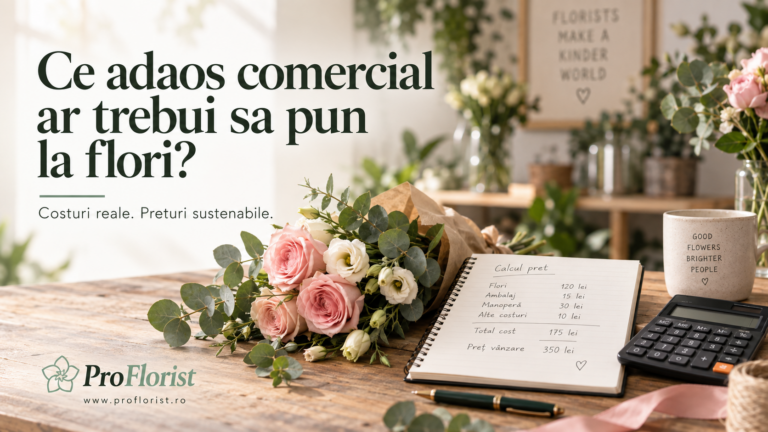
What commercial markup should I apply to flowers?
There is no universal commercial markup that is "correct" for all florists. A multiplier…
Business & Management / Software & Digitalisation
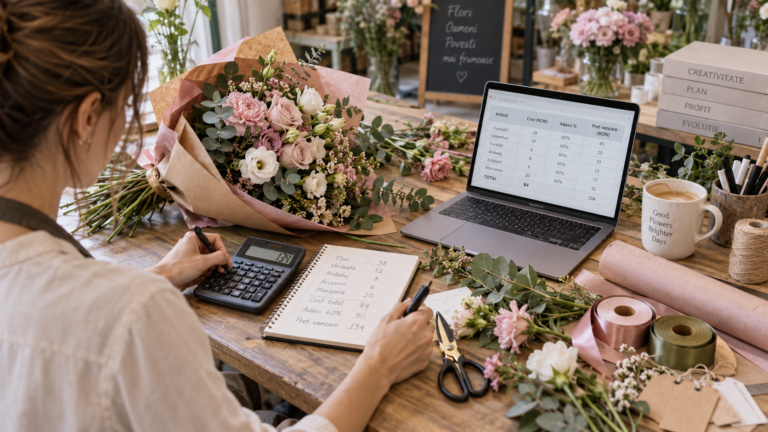
How to calculate the price of a flower bouquet correctly
A practical pricing method based on usable flower cost, greenery, consumables, direct labour, wastage…