Criticism in floristry: creative vulnerability and a genuine opportunity to grow
Criticism is part of learning, professional assessment and business development in any creative field. In floristry, aesthetic choices, emotion and personal perception overlap, which makes a constructive approach to feedback especially important.
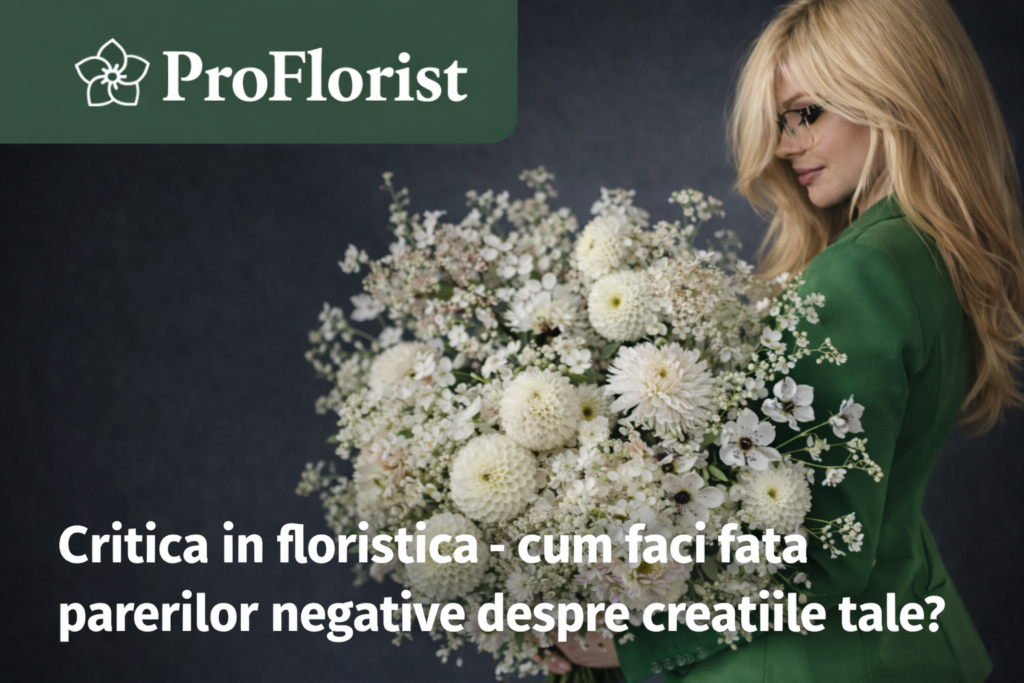
In floristry, as in any creative field, criticism is not only inevitable, but structural. It is part of learning, professional validation and, above all, the evolution of a business. Unlike technical industries, where there are clear evaluation criteria, florists operate in a sensitive territory, where aesthetics, emotion and personal perception are constantly intertwined. This means that a bouquet is never just “right” or “wrong” – it is also interpretable. Hence the difficulty: how do you manage feedback that sometimes has no objective basis, but that can profoundly influence your trust as a professional?
Discussions in international communities of artists and creators show a common pattern: most people at first feel critical as a personal attack, while professionals regard it as an instrument. The difference is not about talent, but about professional maturity. In floristry, this transition is even more visible, because the final product is often associated with important events in people’s lives – weddings, anniversaries, symbolic moments. So any criticism can seem emotionally amplified.
“Everyone is gonna have an opinion… critique is welcome others opinions” (Reddit)
“If you can’t accept the feedback, stop asking for criticism” (Facebook)
That says a lot about the nature of the domain: creativity comes with exposure and vulnerability.
Recommended article for you: Full guide: How you choose your career in floristics and what options you really have
Which sources of criticism carry professional weight?
Not all opinions are equal. In the creative industries, including floristics, there is a clear hierarchy of feedback:
Teachers and mentors in floristry
- the most structured and educational critical
- focus on technique, proportions, style
Other professionals in the field
- fellow florists
- Floral designers
It provides realistic feedback from practical experience
Customers
- the most important business
Their feedback directly influences sales
Family and friends
- emotional support but not always objective
A common example in practice is that of colour combinations. A florist can create a modern bouquet in contrasting tones – for example, intense red combined with raw green and white accents. Technically, the choice can be fair, even innovative. But a client can say, “I don’t like it, it seems too aggressive.” Is this a valid criticism? From an artistic perspective, not necessarily. From a commercial perspective, absolutely. Here comes one of the most important lessons: Critics should be assessed according to context – artistic or business.
At the same time, there is technical criticism, much more valuable and paradoxically difficult to accept. For example, another florist or teacher can see that the bouquet structure is not balanced, that certain flowers are not suitable for the season or that the binding technique reduces the durability of the arrangement. This type of feedback, although sometimes uncomfortable, is the one that makes the difference between a talented amateur and a solid professional. In flower courses, mentors often insist on these details invisible to the client, but essential to the real quality of the work.
Another level of criticism comes from the business area, where feedback is no longer about beauty, but about perceived value. Reviews of “too expensive for what they offer” or “do not look like pictures” are, in fact, direct indicators of market positioning. Often, florists tend to reject these comments, considering them unfair. But properly analysed, they can reveal real problems: differences between expectations and delivery, lack of clear communication or mistargeting the public.
How to assess criticism: not every comment is useful
One of the most important lessons is filtering feedback.
A simple principle:
👉 Not all criticism must be applied. But everything needs to be analysed.
In creative writing (applicable principle and in florist), it is recommended that:
- to know who you’re creating for
- understand the purpose of the work
- choose only the relevant feedback for that purpose
Critics in other creative areas
Interestingly, studies on creative industries show that negative feedback is one of the main factors of progress, if managed correctly. The evolving creators are not those who avoid criticism, but those who develop an internal filtration system. They do not react impulsively, they do not defend themselves automatically, but they analyse: who offers feedback, in what context and with what intention. For example, an observation from a professional in the field has a different weight than a superficial comment from social media.
Critical sources are, by the way, extremely diverse. Teachers and mentors provide structured, development-oriented feedback. Industry colleagues come up with practical observations based on real experience. Customers offer the market perspective, and family and friends often bring emotional feedback, supportive feedback. The problem arises when these sources are blended indiscriminately. A florist who adjusts his style only on the basis of the views of his close friends risks remaining in a limited area without real evolution.
How to use criticism for personal and business growth
1. Separate emotion from information
Don’t react immediately. Analyse.
2. Look for patterns
If 10 clients say the same thing → is no longer an opinion, it’s a signal.
3. Use negative reviews as an audit prompt
Negative reviews are:
- free
- sincere
- direct
Practically a mini-business consultant.
4. Test and adapt
- change colours
- changes styles
- optimise prices
5. Don’t try to please everyone
In creativity, differentiation is the key.
A key issue, but rarely discussed, is the psychological impact of criticism. In floristry, where work is deeply personal, rejection can generate creative bottlenecks or even renunciation. That is why the development of mental resilience becomes a competence as important as technique. Professionals learn to detach from the result without disconnecting from the process. In other words, he learns not to define his personal value through every bouquet he has achieved.
On the other hand, criticism can become an extremely powerful tool for growth, especially in the business area. Negative reviews, for example, are often seen as a risk to the image. In reality, they can function as a free audit. If several customers mention the same problem – delayed delivery, quality differences or poor communication – then not to mention an isolated opinion, but a vulnerable point of business. It is the florists who manage to turn these observations into concrete actions that grow sustainably.
A relevant example is that of workshops that have fully adjusted the online presentation style following customer feedback. Originally, the photos were taken artistically, with diffuse light and aesthetic filters. However, customers claimed that the products delivered did not look identical. The solution was not to abandon style, but to adapt it: more realistic photographs, closer to the final product. The result? Fewer complaints and increased confidence.
Read also this real story of a Romanian florist: Melania Turcu and the Theo Florist: how you build, from Buzău, a floral brand that resists

The practical reality: criticism is part of business
Entrepreneurs in creative industries confirm:
- not all products will be successful
- some ideas don’t work
- negative feedback is constant
The florists who grow up are the ones who:
- Listen without pride
- analyse without panic
- adapt without losing his identity
Over time, criticism becomes:
- a refining tool
- an innovation source
- a competitive advantage
In the end, criticism in floristics is neither enemy nor ally in itself. It’s an instrument. The difference makes it the way it’s used. Acceptance of criticism does not mean submission, and ignorance does not mean force. The balance is the ability to discern, analyse and adapt without losing creative identity.
Because, essentially, success in floristics – as in any creative industry – comes not from avoiding criticism, but from the ability to turn it into real progress.
Related articles
More ideas from the same area

Business & Management / Education & Floral Design
Who sets the standard for professional floristry education in Romania?
Romania offers a growing range of floristry courses, workshops and masterclasses, yet the route…
Florists in Bucharest’s Sector 4: quick solutions for special-occasion flowers
For many customers, florists in Bucharest’s Sector 4 represent a quick response to a…
Education & Floral Design / Events & Community / Supply & Flower Industry
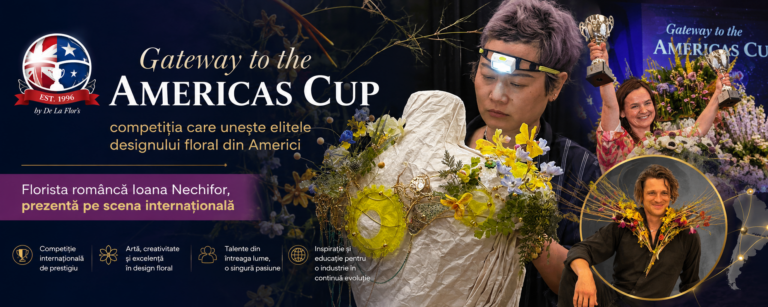
Gateway to the Americas Cup: Ioana Nechifor on the international stage
The Gateway to the Americas Cup has brought respected floral designers from different countries…